
Review · BROOKLYN AND THE OUTER BOROUGHS
New York City: Sunday Harlem Gospel Guided Tour
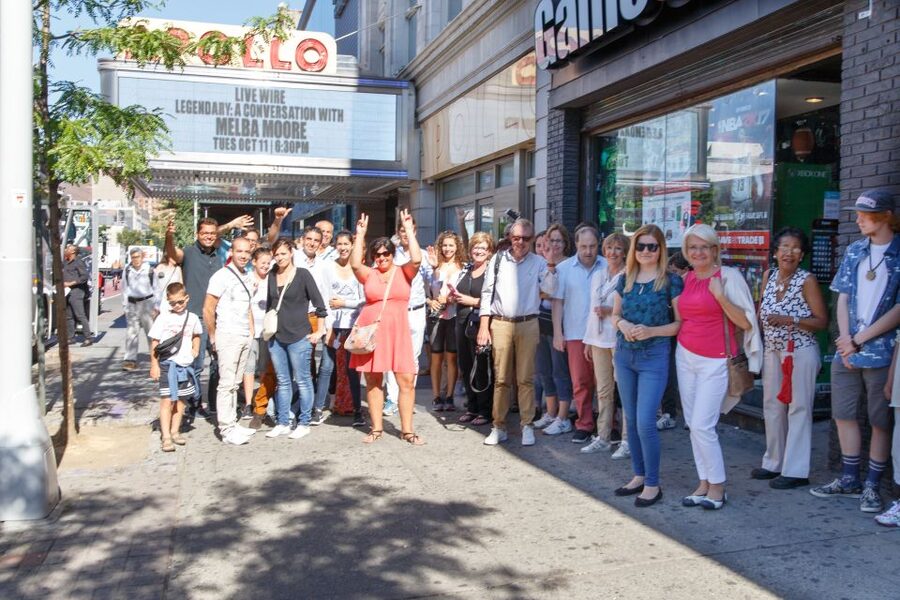
Harlem Sunday has a way of making the past feel close. This tour pairs 125th Street storytelling with an authentic gospel service in a real congregation. I especially like how the guide ties big moments to what you can actually see and stand near, like Columbia University and the Apollo Theater. One possible drawback: you will spend a chunk of time on a bus, so rain can cut down on photo stops outside.
You get a local guide leading you through Harlem’s rise, from early Dutch farm country to a fashionable escape as people fled Lower Manhattan crowding. Then comes the best part, joining a church service where the music does the talking. Guides I’ve seen mentioned by name include Mrs. Peggy, Alvin, Anthony, Serge, and even Mahalia, and the tour runs in Italian, French, and English.
In This Review
- Key things you will do and love on this Harlem gospel tour
- Sunday morning in Harlem: what the 4-hour format does well
- 125th Street history hits different when it is tied to real landmarks
- Apollo Theater and Cotton Club context, without losing the plot
- Columbia University and the Schomburg Center: big institutions with local meaning
- Duke Ellington’s Harlem, where names feel grounded
- The bus ride time: how to use it instead of losing it
- The gospel service: what you are really signing up for
- Dress code and photo rules you should not ignore
- Price and value: is $89 a fair deal for this format?
- Who this Harlem gospel tour is best for
- Languages and guide style: what to expect day-of
- Should you book this Sunday Harlem gospel guided tour?
- FAQ
- Where do I meet for the Harlem Sunday gospel tour?
- How long is the tour?
- What is included in the price?
- Are meals included?
- What languages are the guides offered in?
- What clothing and photo rules should I plan for?
- Is the tour accessible for wheelchair users?
Key things you will do and love on this Harlem gospel tour
- Ride and learn along 125th Street, with real context behind the famous blocks
- Apollo Theater and Cotton Club history, explained in plain terms while you look around
- See major landmarks like Columbia University and the Schomburg Center for Research in Black Culture
- Connect names to places, including where Duke Ellington lived on 125th Street
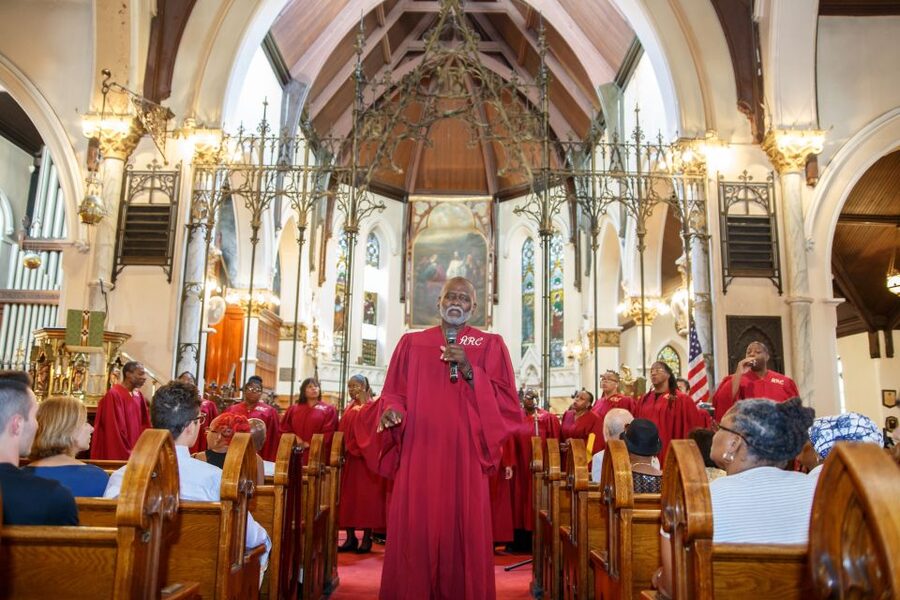
- Attend a Sunday gospel service, for the kind of atmosphere you cannot fake
Sunday morning in Harlem: what the 4-hour format does well
This is a classic “bus + guided Harlem walk + church” day, set up for first-time visitors who want the story without doing homework. The total time is 4 hours, with about 3 hours spent on the Harlem guided portion and the rest as transportation time.
I like this structure because it solves two problems at once. First, Harlem is easier when someone helps you connect the dots between neighborhoods and key landmarks. Second, a gospel service is hard to plan on your own, since you need the right fit and the right timing on a Sunday.
125th Street history hits different when it is tied to real landmarks
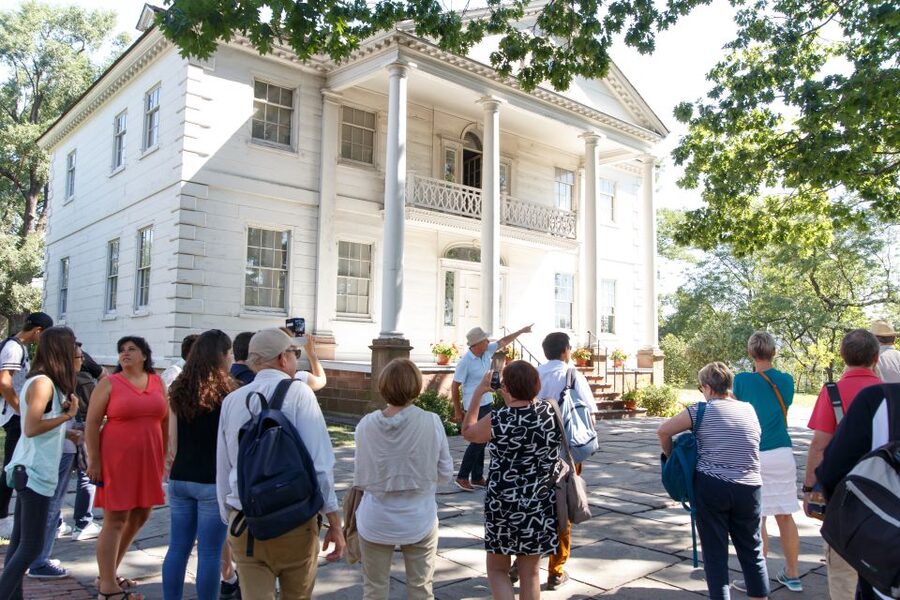
Harlem is not just one neighborhood. It is layers of waves, from rural beginnings through a transformation driven by transportation and real estate. On this tour, you start with the early era, when the area had a rural Dutch farming feel before becoming a summer retreat for prominent New Yorkers.
Then you get the shift toward a more fashionable district as people tried to escape the congestion of Lower Manhattan. After that, the story turns to the Great Migration, when African Americans arrived from southern states and built communities to address economic, political, and social needs together.
That background matters because it changes how you read the street. When you look at the bustle around 125th Street, you are not only seeing landmarks. You are seeing why people fought for community power, culture, and opportunity in the first place.
The rest of our Guided notes for New York City



Apollo Theater and Cotton Club context, without losing the plot
You are set up to see legendary venues that shaped American music and performance. Two of the biggest stops on this kind of Harlem route are the Apollo Theater and the Cotton Club, and this tour specifically calls them out.
What makes these stops worthwhile is the angle. Instead of treating the venues like postcard icons, the guide connects what happened there to the broader Harlem story, including who had access, who gained visibility, and how culture traveled beyond the neighborhood.
Even if you already know the names, you will likely pick up new understanding of how they fit into the neighborhood’s growth. That is also why a guided format is handy. You can stand near these points and still get the “why” in the time you have.
Columbia University and the Schomburg Center: big institutions with local meaning
Two of the landmarks highlighted along the way are Columbia University and the Schomburg Center for Research in Black Culture. These are not just famous addresses. They also represent Harlem’s link to education, scholarship, and cultural preservation.
Columbia University shows how major institutions connect to the surrounding streets and changing city patterns. The Schomburg Center, on the other hand, points to the role that research and archives have played in honoring and interpreting Black culture.
If you like learning that goes beyond trivia, this part helps you understand why Harlem became so important to more than music. It became a place where history, identity, and scholarship could have real public impact.
Duke Ellington’s Harlem, where names feel grounded
One standout detail on this tour is the stop that points out where Duke Ellington lived on 125th Street. It is the kind of fact that makes the neighborhood feel less like a map and more like a set of lived-in streets.
I like this approach because it avoids the “museum only” feeling. You are not just hearing about a legend. You are standing in the general area where his life intersected with the Harlem scene.
The bus ride time: how to use it instead of losing it
You will be on a bus for the transportation portion of the 4 hours. That sounds like downtime, but in practice it is often where the guide sets the frame for the walk.
It also helps the group stay together efficiently, since Harlem sights can be spread out. This is especially useful if you are visiting with limited time and want a lot of highlights without navigating every turn yourself.
A practical note from past guests: rain can limit how often you can get outside for photos. If the weather looks shaky, plan for more “watch and listen” time on the bus and fewer picture windows.
What else we logged under City Tours in New York City


The gospel service: what you are really signing up for
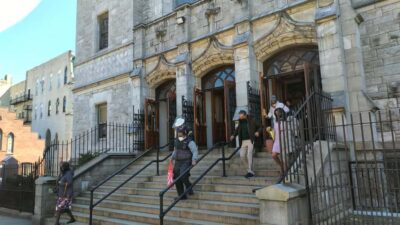
The headline experience is joining a local congregation for a Sunday service. This is the part that most strongly separates a gospel church visit from a standard sightseeing tour.
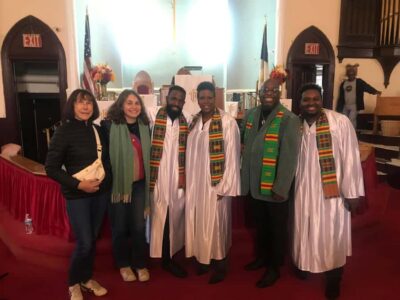
The goal is not just to see the building. It is to hear and feel how gospel music works in a real worship setting. That includes the emotions, the call-and-response energy, and the harmony that forms when a group is singing together.
One of the best values here is that the tour gives you a “how to be welcome” path. You are not wandering in alone, guessing what to do. You show up with a guide who knows the flow, and that helps you experience the service with less awkwardness.
Dress code and photo rules you should not ignore
This tour has a short list of restrictions, and they matter because church settings can be strict about respect and safety. You are not allowed to wear sandals or flip flops, shorts, or sleeveless shirts. Flash photography is also not allowed, and photography inside is not allowed.
So pack with the church in mind. If you tend to travel light, think about swapping into covered, comfortable layers before you arrive. Comfortable shoes are a big deal too, since you will be standing and moving during the neighborhood portion.
Price and value: is $89 a fair deal for this format?
At $89 per person, this is not a bargain-basement tour, but it is also not priced like a luxury show. You are paying for a few things that add up fast on your own: transportation, a live guide, and access to a gospel service in a local church.
If you tried to recreate the experience independently, the hardest parts would be timing the Sunday service correctly and finding a guided route that connects the neighborhood story to what you see. This tour handles both, and that is the real value.
You also get the benefit of having the history explained in a condensed way that still includes major themes: Dutch origins, Harlem’s fashionable turn, the Great Migration, and the community-building response to big challenges.
Who this Harlem gospel tour is best for
I think this tour fits best if you are:
- Visiting New York for the first time and want the Harlem essentials in half a day
- Interested in how culture, migration, and community shaped the neighborhood
- Want gospel music as an authentic Sunday experience, not a generic performance
It may not be ideal if you prefer total independence, since you will follow the group timeline and bus route. Also, if you want lots of time to roam freely on foot without stops, the “guided and scheduled” format might feel a bit structured.
Languages and guide style: what to expect day-of
The live tour guide is listed for Italian, French, and English. In past experiences, guides have been noted as using multiple languages in practice, and that can help if your group has mixed language comfort levels.
Guide energy is a big part of whether this feels like a chore or a highlight. Recent guests named guides like Mrs. Peggy, Alvin, Anthony, Serge, and Mahalia, and the common thread in the praise is that the tour is both informative and fun, with storytelling that keeps people engaged.
Should you book this Sunday Harlem gospel guided tour?
If you want Harlem history tied to iconic places, plus the chance to hear gospel in a real Sunday setting, I would book it. The combination of 125th Street landmarks and the church service is the kind of pairing that is hard to assemble well on your own.
Book it especially if you like structured guidance and you want to walk away with a clearer picture of why Harlem became Harlem. Consider skipping or choosing a different option if you dislike bus time or if you know you cannot be comfortable with the church dress and photo rules.
FAQ
Where do I meet for the Harlem Sunday gospel tour?
Meet at 690, 8th Avenue between 43rd and 44th Streets.
How long is the tour?
The tour lasts 4 hours.
What is included in the price?
The price includes a sightseeing tour of Harlem, transportation, and a gospel service in a local church.
Are meals included?
No, meals are not included.
What languages are the guides offered in?
The live tour guide is available in Italian, French, and English.
What clothing and photo rules should I plan for?
You cannot wear sandals or flip flops, shorts, or sleeveless shirts. Flash photography is not allowed, and photography inside the church is not allowed.
Is the tour accessible for wheelchair users?
Only foldable wheelchairs or walkers are permitted on board, and they are stored in the luggage compartment. The buses do not have lifts, so a passenger using a foldable wheelchair must be accompanied by someone who can assist with boarding and disembarking. It is recommended that you notify the provider in advance, ideally up to 3 weeks before travel, to help them accommodate you.
Guided reviewed right across New York City
- New York in One Day Guided Sightseeing Tour★ 5.0 · 13,166 reviews
- Central Park Pedicab Guided Tours★ 5.0 · 7,108 reviews
- From NYC: Guided Day Trip to Washington DC by Van or Bus★ 4.7 · 3,418 reviews
- NYC: Statue of Liberty and Ellis Island Guided Tour★ 4.6 · 2,765 reviews
- Original NYC Guided Food Tour of Chinatown and Little Italy★ 5.0 · 2,194 reviews
Tours: the rest of the New York City file
- Statue of Liberty and Ellis Island Tour: All Options★ 5.0 · 13,571 reviews
- New York in One Day Guided Sightseeing Tour★ 5.0 · 13,166 reviews
- Central Park Pedicab Guided Tours★ 5.0 · 7,108 reviews
- New York City: Manhattan Helicopter Tour★ 4.7 · 7,076 reviews
- Private Central Park Pedicab Tour★ 5.0 · 6,981 reviews
Tour Reviews: more from our New York City desk
- NYC: SUMMIT One Vanderbilt Tickets★ 4.7 · 51,195 reviews
- NYC: Empire State Building Tickets – Observatory & Museum★ 4.7 · 25,757 reviews
- New York City: Statue of Liberty & Ellis Island with Ferry★ 4.6 · 18,683 reviews
- New York City: American Museum of Natural History Ticket★ 4.5 · 15,447 reviews
- Statue of Liberty and Ellis Island Tour: All Options★ 5.0 · 13,571 reviews
Newest New York City reviews added to this site
- NYC: Whitney Museum Ticket
★ 4.2 · 315 reviews - NYC: Manhattan & Statue of Liberty Cruise with Shuttle Bus
★ 4.6 · 316 reviews - 60-Minute Statue of Liberty Sightseeing Cruise
★ 3.0 · 317 reviews - True Crime New York: NYPD-Guided Mafia Walking Tour w/ Food
★ 4.6 · 318 reviews - New York City Cocoa and Carols Holiday Cruise
★ 4.5 · 318 reviews - Harlem Wednesday Morning Gospel Tour
★ 4.5 · 320 reviews - Central Park Bike Rental: Quality Bikes with Map, Helmet, Lock
★ 4.0 · 324 reviews - New York City Harlem Highlights w/ Gospel Concert & Transfer
★ 4.5 · 326 reviews - 9/11 Memorial Tour with Optional Museum and One World Access
★ 5.0 · 330 reviews - New York City Sunset Cruise on a Yacht
★ 5.0 · 331 reviews
Brooklyn and the Outer Boroughs, side by side.
 ★ 5.0NYC Bus Tour of Brooklyn, Bronx, Queens: Art, Food & SportsFrom $843,805 reviews
 ★ 4.5NYC Highlights Tour: Bronx, Brooklyn, Harlem, Queens & ConeyFrom $462,846 reviews
 ★ 4.5NYC: Contrasts Tour of Harlem, The Bronx, Queens & BrooklynFrom $392,167 reviews
 ★ 4.7NYC: Brooklyn Nets NBA Game Ticket at Barclays CenterFrom $312,033 reviews
 ★ 4.7NYC: Harlem Hallelujah! Gospel Wednesday ConcertFrom $251,638 reviews
 ★ 4.7New York City: Harlem Gospel Live Music ConcertFrom $281,479 reviews
 ★ 4.3From Manhattan: Bronx, Queens and Brooklyn Half-Day TourFrom $791,321 reviews
 ★ 4.4From Manhattan: Full-Day NYC Boroughs and Coney Island TourFrom $491,120 reviews
This one is also listed in