
Review · WALKING TOURS
Boston History Tour: Scenic Walk Through Time & Landmarks
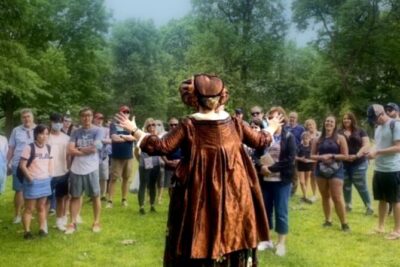
Boston history clicks into place fast. This relaxed, small-group walk strings together major Revolutionary-era stops from Faneuil Hall to Beacon Hill, so the story makes sense without feeling like homework.
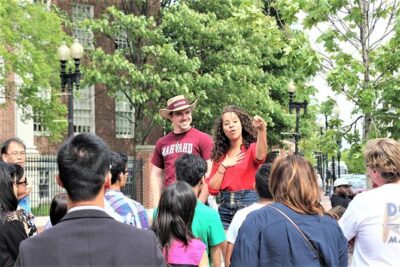
I love the way the guide turns street corners into scenes from real life, and the surprise local treat makes the tour feel personal, not just educational. From guides like Bob, Nabil, Alivia, Lexie, and Tim, you can expect humor plus clear answers to questions.
One possible drawback: this is a walking tour that moves through busy downtown sidewalks and storefront areas, so if you hate crowds, plan your mindset for urban foot traffic.
In This Review
- Key things I’d watch for
- Arriving by the Greenway Carousel, and why the start matters
- Faneuil Hall to Old South, where independence becomes practical
- Custom House Tower views, plus the city’s goods-and-power story
- Old City Hall and the Bronze Donkey, a photo stop with meaning
- Old State House to Boston Common, Revolution to everyday recreation
- Beacon Hill and the Robert Gould Shaw memorial, not just pretty streets
- Massachusetts State House dome, Hancock, and Paul Revere’s 1795 role
- Granary Burying Ground’s 1660 start, and the Public Garden’s Revolution links
- Price and value: what $39.80 buys you in real time
- The practical stuff that affects your day
- Should you book this Boston History Tour?
Key things I’d watch for
- Small group, max 16 people, so you get interaction instead of a lecture.
- Surprise local treat is included, sometimes with alcohol, so bring your ID just in case.
- Revolutionary landmarks you can picture, from the Old State House to the Granary Burying Ground.
- A carbon-neutral, B Corp-certified operator, for responsible travel without extra effort.
- A tight route in about 2 hours, with a manageable 4 km (2.5 miles) walk.
Arriving by the Greenway Carousel, and why the start matters
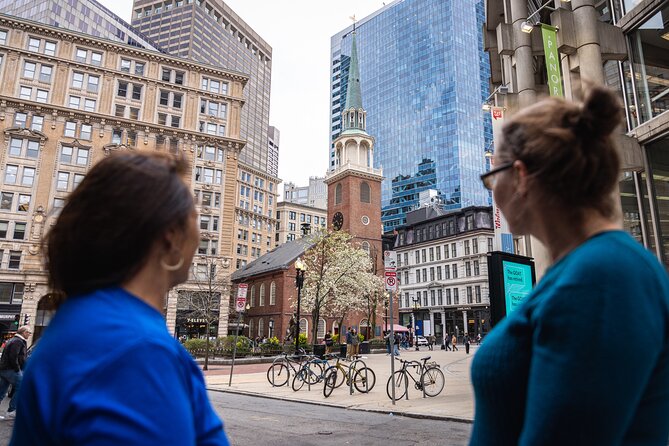
I like that this tour begins right at the Rose Kennedy Greenway area, at the Greenway Carousel (191 Atlantic Ave). It is an easy, central spot to find, and it sets a helpful tone: Boston is not just old buildings, it is a living city that changed, then kept changing.
From the very start, your guide frames the day around how Boston got from colonial friction to modern neighborhoods. That matters because so many first-time visits feel like random sightseeing blocks. Here, the walking path is the thread.
Also, this is a mobile-ticket tour near public transportation. That means less time hunting for paper tickets and more time getting your bearings.
Faneuil Hall to Old South, where independence becomes practical
The tour kicks off at Faneuil Hall Marketplace, a place that still feels like a civic stage. Your guide connects it to the revolutionaries who pushed for independence from Great Britain, and you get the key idea without getting lost in dates.
Then you head toward two powerfully symbolic stops. The Old South Meeting House is a reminder that the Boston Tea Party did not happen by accident. This former church setting helps you understand planning, messaging, and collective action as something real people organized, not just a headline.
You also get a quick but very telling pass by the site of Boston’s first bookstore. It is the kind of stop that makes you think differently about history. Boston’s revolution was not only ships and taxes, it was ideas moving through print. In this one stretch, you learn that publishers connected to major American works were part of the city’s intellectual life, including titles linked to Thoreau, Hawthorne, and Longfellow.
Additional Walking Tours on the review pile in Boston

Custom House Tower views, plus the city’s goods-and-power story
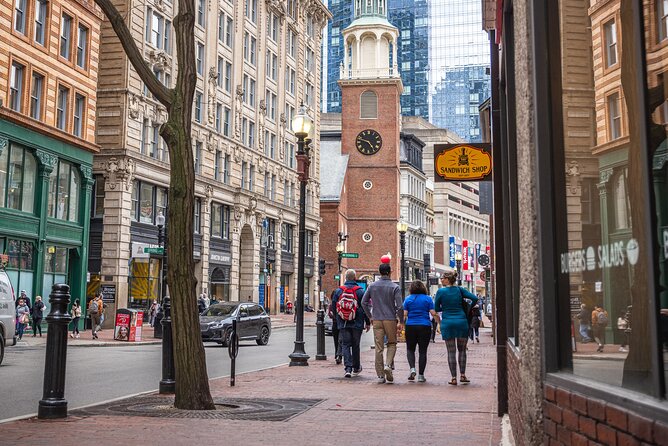
Between Faneuil Hall and the next major stops, you see the Custom House Tower. What makes it interesting is the backstory: it is described as the first skyscraper built in Boston, and it originally served a totally different purpose, storing incoming goods when they arrived.
That contrast is the whole point of this tour. Boston went from port activity to modern city power. Even if you only catch a view from the street, your guide makes you notice how the city evolved rather than just marking famous sites.
Old City Hall and the Bronze Donkey, a photo stop with meaning
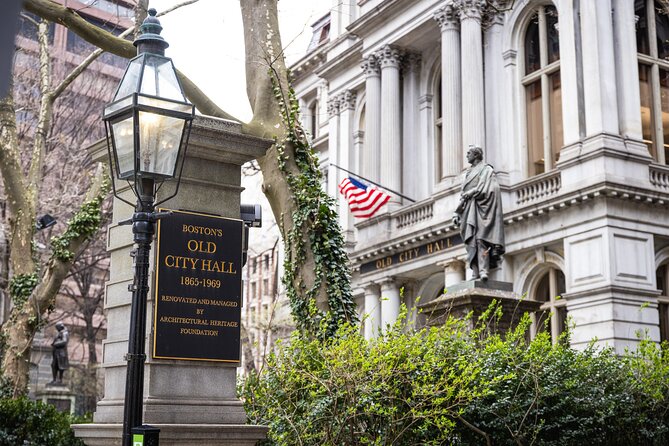
Old City Hall is one of those spots where you get both architecture and civic history in a short time. It housed the city council and America’s first public school, which is a big deal for how the city governed itself and educated people.
The building’s French architecture makes it visually stand out, but the practical value here is what your guide points out: Boston had early ambitions for civic institutions. And yes, you will have a moment to snap a photo with the Bronze Donkey. It is a funny break in the middle of serious topics, which helps the tour stay light and memorable.
As you keep walking, you pass through Downtown Crossing and head toward King’s Chapel. If you are lucky, you might hear the organist on the oldest church organ in the US. That little live-moment possibility is a nice reminder that Boston’s history is still audible.
Old State House to Boston Common, Revolution to everyday recreation
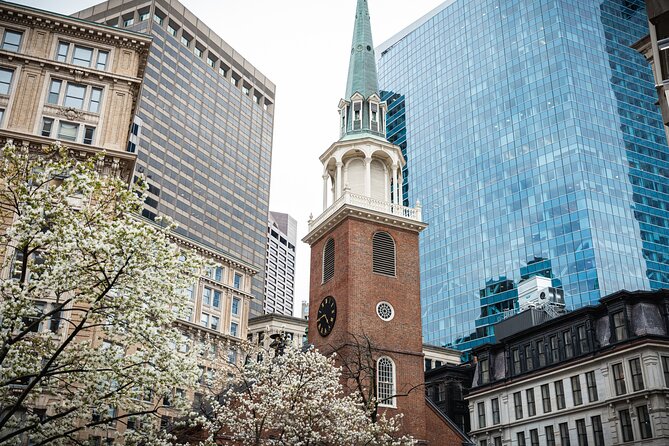
The Old State House stop is a highlight because it connects two events that shaped how Americans think about government and rights.
You will learn that in 1776, the Declaration of Independence was announced there. Right after that, your guide ties in the Boston Massacre, so you see how the revolution shifted from political argument to real danger. This is the kind of storytelling that helps you remember a place, not just a fact.
Then you move into Boston Common. This is the oldest city park in the US, dating back to 1634, and it is still used for the same everyday purpose: recreation, memorials, and open space for locals and visitors. That continuity is powerful. You can picture people in earlier centuries walking here, gathering, and living next to the civic drama happening just blocks away.
Your guide also points out how different parts of the route changed over time. One section focuses on how an area declined due to sailors and British soldiers, then later became the iconic neighborhood people come to admire. That is how Boston often works, messy history followed by reinvention.
Beacon Hill and the Robert Gould Shaw memorial, not just pretty streets
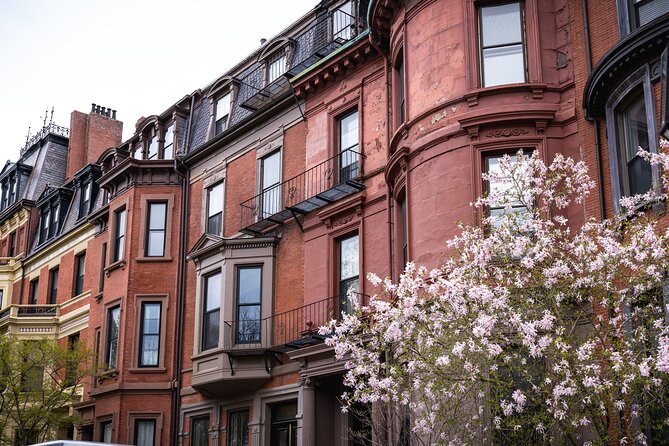
Some tours skim Beacon Hill as charm and brickwork. This one keeps the focus on how the neighborhood fits into American story lines.
You explore the cobbled streets as your guide explains the neighborhood’s evolution, then you reach a memorial tied to one of the first African American regiments in the Civil War, honoring Robert Gould Shaw. This is a meaningful pause, and it is timed so you are not rushing past with your camera only half-ready.
I like that the tour includes this kind of memory in the same walk as Revolutionary landmarks. It prevents history from feeling like a single era. Boston changed again and again, and the walk makes that feel natural.
Elsewhere under Historical Tours across Boston




Massachusetts State House dome, Hancock, and Paul Revere’s 1795 role
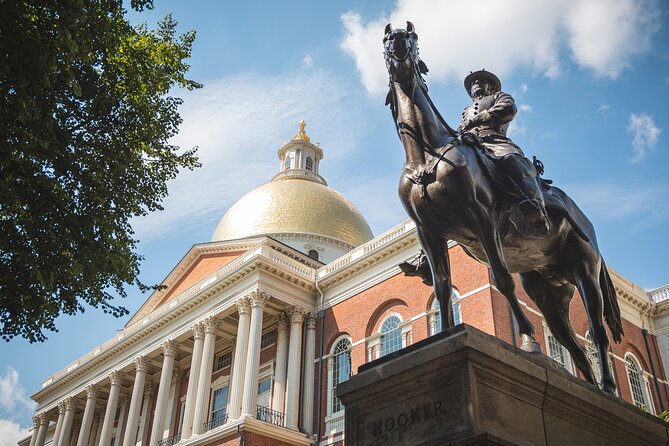
Next comes the Massachusetts State House. The glittering dome is hard to miss, and your guide uses the building to connect the state’s leadership to its founding figures.
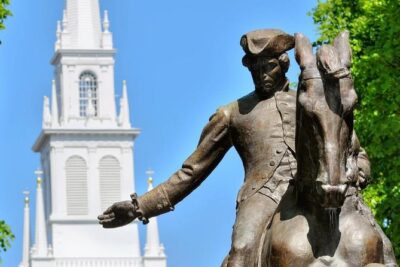
You learn about John Hancock, described here as the original landowner, and you also hear about Paul Revere’s role in the 1795 cornerstone ceremony. The big benefit of this stop is perspective: the revolution did not end in 1776. It turned into governance, institutions, and public buildings that still function today.
Even if you are not a big architecture person, I think you will enjoy the State House part because it is explained as an ongoing project, not a museum piece.
Granary Burying Ground’s 1660 start, and the Public Garden’s Revolution links
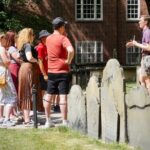
The Granary Burying Ground is where the tour turns reflective. This cemetery dates back to 1660 and was originally part of Boston Common. That connection gives you a visual map of how the park and the city’s burial grounds share a single origin story.
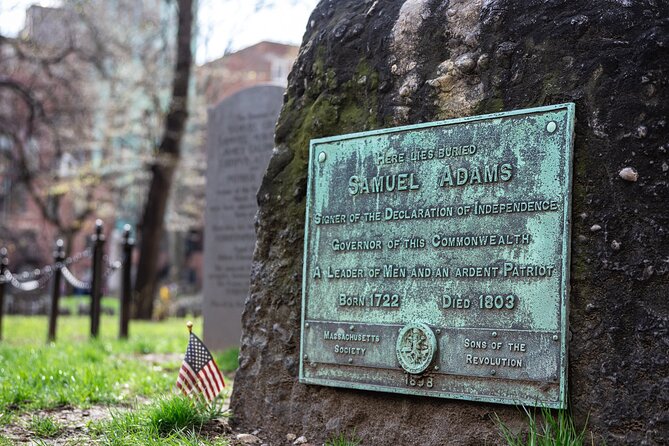
You pass graves of major Revolutionary figures, including John Hancock, Paul Revere, and Sam Adams. Again, the value is not only names, it is what your guide says about why these people still matter, and how Boston remembers them in public space.
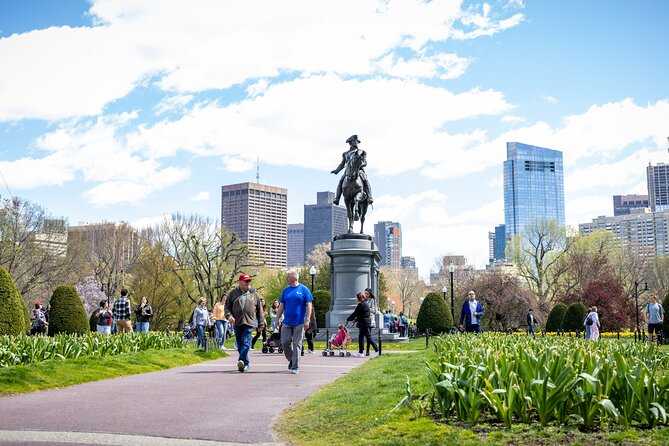
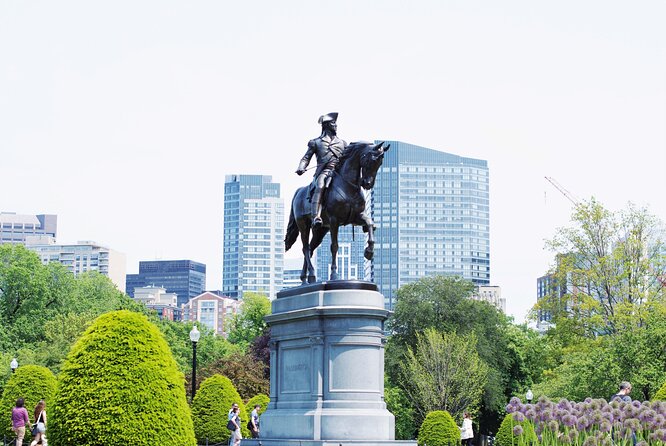
Then the walk ends at the Boston Public Garden, a lively place that is described as the first public park in America. Your guide also shares how the garden was used during the Revolution and beyond, so it does not feel like a random scenic stop. It feels like another chapter in the same story.
When your tour finishes near 4 Charles St, you are in a good spot to keep moving at your own pace. You can simply linger where locals like to relax, or grab a bite using your guide’s insider tips.
Price and value: what $39.80 buys you in real time
At $39.80 per person for about 2 hours, this tour hits a sweet spot: you get a lot of landmark coverage without paying for a private vehicle or a long all-day commitment.
Here is what makes the value feel solid:
- A live local guide with storytelling that ties places together.
- A route that covers multiple civic and Revolutionary sites in one sweep.
- A surprise local treat included, which is especially good for travelers who do not want to plan every snack.
- A small-group format, max 16 people, which helps keep the experience interactive.
The carbon-neutral, B Corp-certified angle is another reason this feels like responsible value. You are not sacrificing comfort or time to get that. It is still a straightforward walking tour.
The practical stuff that affects your day
This is a 4 km (2.5 miles) walk, and it is suitable for all ages and fitness levels, but you should still wear comfortable shoes. Two hours goes by faster when you are not battling sore feet.
It also runs rain, shine, or snow. So yes, you should dress for weather. The good news is that walking tours in winter can be great because streets are often calmer and photos are easier, as long as you are bundled up.
Finally, the surprise local treat can involve alcohol, and proper ID may be required. If you prefer non-alcohol options, I’d mentally file this as a “could be a beer or could be a treat,” and plan accordingly.
Should you book this Boston History Tour?
Book it if you want a first-time-friendly way to connect Boston landmarks into one clear narrative. I especially think it works well if you like:
- Revolutionary-era sites that are explained in plain language
- A guide who uses humor and keeps people engaged
- A small group format that lets you ask questions
- A tour length that does not eat your whole day
Skip or adjust expectations if you dislike crowds and busy retail sidewalks, because this route includes walking through downtown pedestrian zones. Also, if you only want indoor museums and ticketed exhibits, this is not built around that. It is built around streets, buildings, and what you can learn from them.
If your goal is to get your bearings fast and understand how Boston went from colonial unrest to modern civic life, this is a smart, good-value choice.
Still working through Walking Tours in Boston
- Boston: Freedom Trail History Small Group Walking Tour★ 5.0 · 6,450 reviews
- Harvard University Campus Guided Walking Tour★ 4.5 · 3,632 reviews
- Boston Freedom Trail Walking Tour with Costumed Guide★ 4.5 · 2,531 reviews
- The Full Revolutionary Story Epic Small Group Boston Walking Tour★ 5.0 · 2,356 reviews
- Boston’s Freedom Trail: A Revolutionary Walking Tour★ 4.9 · 1,748 reviews
Tours: the rest of the Boston file
- Boston Duck Boat Sightseeing City Tour with Cruise Along Charles River★ 4.5 · 9,378 reviews
- Boston: Freedom Trail History Small Group Walking Tour★ 5.0 · 6,450 reviews
- Boston Hop-On Hop-Off Trolley Tour with 13 Stops★ 4.5 · 5,576 reviews
- Boston Duck Tour: The Original and World-Famous★ 4.6 · 3,935 reviews
- Harvard University Campus Guided Walking Tour★ 4.5 · 3,632 reviews
Tour Reviews: more from our Boston desk
- Boston Duck Boat Sightseeing City Tour with Cruise Along Charles River★ 4.5 · 9,378 reviews
- Boston: Freedom Trail History Small Group Walking Tour★ 5.0 · 6,450 reviews
- Boston Hop-On Hop-Off Trolley Tour with 13 Stops★ 4.5 · 5,576 reviews
- Boston Duck Tour: The Original and World-Famous★ 4.6 · 3,935 reviews
- Harvard University Campus Guided Walking Tour★ 4.5 · 3,632 reviews
Newest Boston reviews added to this site
- Cocktails & Cannoli: Boston’s North End Dessert Tour
★ 5.0 · 309 reviews - View Boston Observation Deck Admission Tickets
★ 4.5 · 314 reviews - Walk the Historic Freedom Trail with Costumed Guide
★ 4.5 · 329 reviews - 90-Min Narrated Trolley Tour of Lexington and Concord, MA
★ 4.5 · 358 reviews - Boston Pass: 40+ Things To Do – Includes Franklin Park Zoo
★ 4.0 · 359 reviews - Boston: City Cruises Sunset Skyline Cruise with Commentary
★ 4.6 · 381 reviews - Boston to Plymouth Day-Trip including Quincy, Plimoth Patuxet and Mayflower II
★ 5.0 · 407 reviews - Martha’s Vineyard Day Trip with Optional Island Tour from Boston
★ 4.5 · 407 reviews - City Cruises Boston 90-Minute Harbor Sunset Sightseeing Cruise
★ 4.5 · 411 reviews - Sunset Sailing Cruise on a Tall Ship in Boston Harbor
★ 4.5 · 414 reviews
Walking Tours, side by side.
 ★ 5.0History and Hauntings of Salem Guided Walking TourFrom $3614,564 reviews
 ★ 4.5New Orleans Premier Ghost, Voodoo and Vampire Walking TourFrom $2712,856 reviews
 ★ 5.0Little Havana Food and Walking Tour in MiamiFrom $698,882 reviews
 ★ 5.0Chicago: Gangsters and Ghosts Walking TourFrom $527,155 reviews
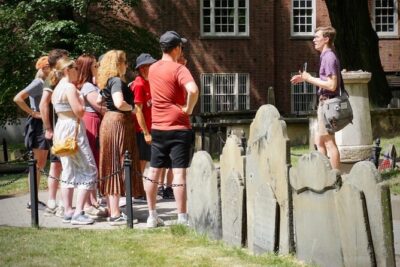 ★ 5.0Boston: Freedom Trail History Small Group Walking TourFrom $356,450 reviews
 ★ 5.0Historic Charleston Guided Sightseeing Walking TourFrom $306,216 reviews
 ★ 5.0New Orleans Food Walking Tour of the French Quarter with Small-Group OptionFrom $756,118 reviews
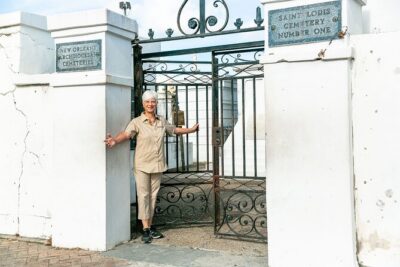 ★ 4.5St. Louis Cemetery No. 1 Official Walking TourFrom $253,941 reviews
This one is also listed in