
Review · CHARLESTON HISTORIC TOURS
Charleston’s Best Highlights: History, Culture & Architecture
Charleston tells stories on every corner. In this 2-hour walk, you move through downtown highlights like Old Exchange, Rainbow Row, and City Hall, guided by a licensed guide.
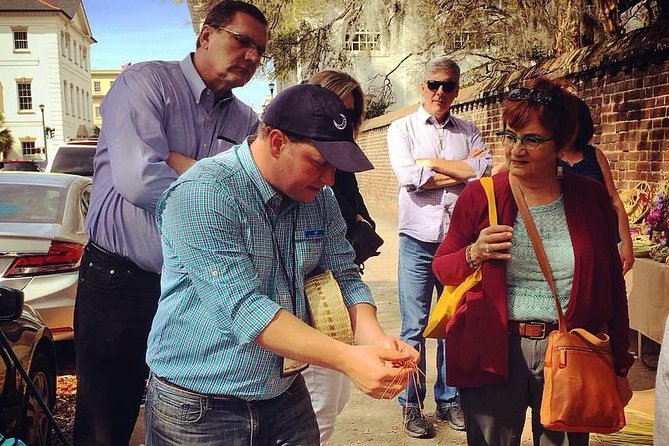
I love the way the guide turns famous places into a timeline you can actually picture, from the Declaration of Independence being read at Old Exchange to the Constitution being ratified in South Carolina in 1788. I also love the small group feel, up to 20 people, and how guides like Brian or Finn can tailor the walk to what you want to see.
One thing to plan for is limited entry. Dock Street Theater and St. Michael’s Church can depend on availability, and you do not go inside Old Slave Mart Museum.
In This Review
- Key Highlights You Will Actually Feel on This Walk
- Starting at 122 E Bay St, and Why Old Exchange Sets the Tone
- Rainbow Row: A Quick Stop That Teaches You How Charleston Preserves
- Old Slave Mart Museum: Historical Context, Without Forcing You Inside
- French Huguenot Church: A 19th-Century Gothic Revival Pause
- Dock Street Theater and City Hall: Where Charleston’s Culture Meets Its Rules
- St. Michael’s Churchyard: Tiffany Stained Glass and Constitution Names
- Nathaniel Russell House Garden: A Federal-Style Breather
- High Battery Finish: Fort Sumter in View and the Beauregard Moment
- The 2-Hour Pace, the Group Size, and the Reason It Feels Personal
- Price and Value: What Is Included, and What You Should Budget For
- Should You Book Charleston’s Best Highlights Walking Tour?
- FAQ
- How long is the walking tour?
- Is the tour offered in English?
- Where does the tour start?
- How many people are in the group?
- Do I need admission tickets for every stop?
- Will we enter Old Slave Mart Museum?
- Does the tour enter Dock Street Theater and St. Michael’s Church?
- Is a mobile ticket used?
- Are service animals allowed?
- What happens if the weather is bad?
Key Highlights You Will Actually Feel on This Walk
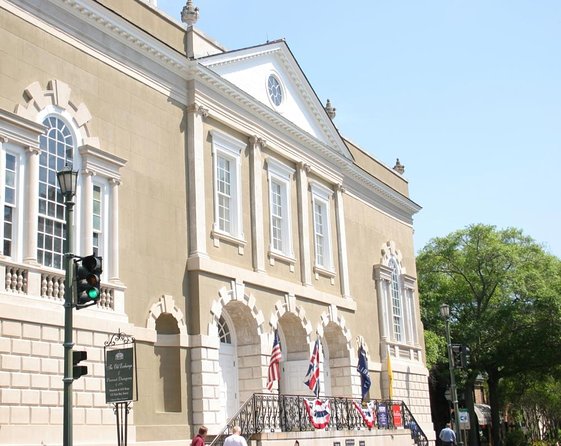
- Start at Old Exchange & Provost Dungeon, tied to major national moments from 1776 through the early 1790s
- Rainbow Row on a tight stop, including the long row of Georgian houses and their 1930s color restoration
- Old Slave Mart Museum is handled with care, with historical context but no entry into the building
- Two church stops with strong contrasts, from the French Huguenot Church to St. Michael’s Tiffany stained glass
- Dock Street Theater and City Hall in one sweep, with a quick peek at downtown power and culture
- A High Battery finale with Fort Sumter in view, plus the Beauregard moment at the waterfront
Starting at 122 E Bay St, and Why Old Exchange Sets the Tone
The tour meets at 122 E Bay St and loops back to the same spot. You’re walking in the center of downtown Charleston, so the route makes sense fast. You get a compact overview without hopping across town.
The first stop is Old Exchange & Provost Dungeon, a c. 1771 building with an outsized résumé. This is where the Declaration of Independence was read in 1776. Later, it was used as a British prison for roughly two years during the American Revolution. The storyline keeps stacking: the U.S. Constitution was ratified in South Carolina in 1788, and George Washington was entertained during a week-long visit in May 1791.
That’s why this opening matters. It frames your whole walk as more than pretty streets. You’re seeing how Charleston plugs into national history, not just local trivia. One practical point though, the stop involves a building ticket. Admission is not included, so budget for that if you want to go in.
If you’re the type who asks questions, this is where the guide can really flex. Expect dates, names, and connections that help the city feel less like a postcard and more like a story you understand.
Rainbow Row: A Quick Stop That Teaches You How Charleston Preserves
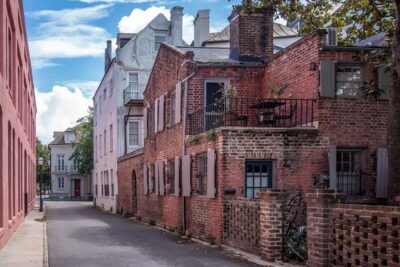
Next comes Rainbow Row, the long row of attached Georgian houses. It’s described as the longest row of attached Georgian row houses in the country. In the 18th and 19th centuries, these were mariner’s stores, so the architecture was tied to trade and the waterfront economy.
The angle I like here is the preservation piece. In the 1930s, these buildings were restored as part of Charleston’s preservation efforts, and painted in a bright Caribbean color scheme. That means you’re not just seeing the past, you’re seeing how Charleston decided what parts of its past were worth saving and how to present them.
This stop is free, and it’s short. It’s a good photo moment, but it’s also useful for your mental map. After this, the rest of the walk feels more connected because you’ve seen the city’s “old but curated” look.
Elsewhere under Historical Tours across Charleston
Old Slave Mart Museum: Historical Context, Without Forcing You Inside
The walk then heads to the Old Slave Mart Museum area. This building was known as Ryan’s Slave Mart in the 1850s and served as an auction site of the interstate slave trade. The guide talks about Charleston’s role in the slave trade.
Important detail: you do not enter the building on this tour. Admission is not included. The City of Charleston operates the museum, and tours are available on site if you want a deeper, ticketed experience.
For many people, that approach is the right balance. You get context without turning this walk into a long museum detour. Still, you should come prepared for the subject matter. If you prefer to control how long you stay with tough history, this structure gives you a choice.
If you want to do both, think of this tour as the orientation, and the museum visit as the follow-up.
French Huguenot Church: A 19th-Century Gothic Revival Pause
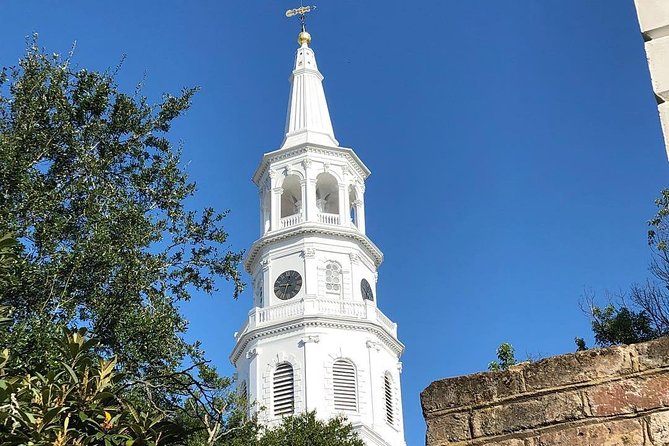
After the weightier topics, the French Huguenot Church offers a different kind of stop. It’s a Gothic Revival building from 1845, and it houses one of the only practicing Huguenot (French Protestant) congregations in the country.
This is a free stop and a short one, but it changes the rhythm of the walk. You’ll hear about religious history from the past into the present, but focused through this specific place rather than broad generalities.
If your travel style is architecture and identity, this is a neat switch. You move from commerce and power, to faith, to the public spaces where Charleston showed off its culture.
Dock Street Theater and City Hall: Where Charleston’s Culture Meets Its Rules

Then the tour hits Dock Street Theater, where timing can matter. Entrance depends on availability. The story here is that the theater was built on the site of the first theater in the British colonies. The Dock Street Theatre c. 1937 was restored from the old Planter’s Hotel, c. 1809.
You also get the living-culture angle. The Charleston Stage company operates there as the largest professional theater company in South Carolina, and it puts on roughly 120 performances each year. That’s a big clue that Charleston’s historic buildings aren’t just museum shells. They still do work.
This stop is free, but only if the entrance situation cooperates. So manage expectations. View first, then see what you can access.
Right after that, you’re at Charleston City Hall, also free. The building sits in one of the “Four Corners of Law,” a phrase attributed to Robert Ripley. City Hall was built in 1801 as a bank, and it’s been used as a city hall since 1818. It’s also one of the oldest continuously run city halls in the country.
Here’s a helpful practical perk: during weekdays, visitors can enter the council chamber and see the collection complimentary. If your schedule lines up, this can turn a quick stop into a real inside glimpse.
St. Michael’s Churchyard: Tiffany Stained Glass and Constitution Names
St. Michael’s Church is the kind of stop that makes you slow down, even if you think you’re done sightseeing for the day. The tour notes it as the oldest house of worship in the city, c. 1761.
Entrance depends on availability again, but even when access is limited, the tour context helps. You’ll hear about Charleston’s religious history of the past and present, and you’ll be pointed toward original woodwork plus Tiffany stained glass windows. The churchyard also matters historically: John Rutledge and Charles Cotesworth Pinckney, U.S. Constitution signers, are buried there.
This is where the tour’s timeline “clicks” for a lot of people. You’ve already been at Old Exchange and City Hall with major national connections. St. Michael’s adds the religious layer, and it does it in a physical way you can see.
Also, expect the guide to make time for questions here. This is a natural point where people ask, how does a city carry all these strands at once?
More filed under Charleston Historic Tours in Charleston




Nathaniel Russell House Garden: A Federal-Style Breather
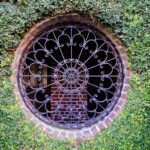
Next is the Nathaniel Russell House. You enter the garden of this Federal style townhouse built in 1808 and owned by Nathaniel Russell. He was a wealthy merchant involved in shipping, and the tour frames him as hailing from Rhode Island.
This stop is admission ticket not included, and it’s shorter in time. But that garden entry matters. It gives you a break from the street level motion while still staying connected to the architecture and power themes you’ve been hearing all along.
I like how this stop bridges the waterfront economy theme from earlier. You saw mariner’s stores at Rainbow Row. Now you see a wealthy shipping merchant connected to a townhouse garden space.
If you want photos, this is a better spot to slow down and compose. If you’re traveling with kids, it’s also usually the kind of stop that feels less like a lecture and more like a calm moment.
High Battery Finish: Fort Sumter in View and the Beauregard Moment
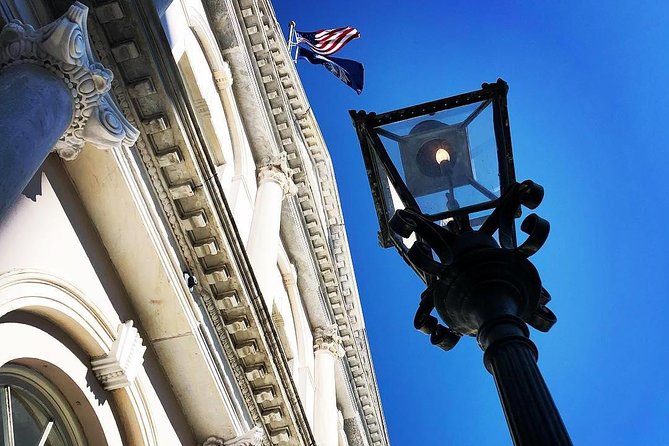
The last stretch turns you toward the waterfront. You walk up to the High Battery wall to take in views of the waterfront mansions and to discuss the beginning of the Civil War. Fort Sumter is in view from here, which helps the talk become visual.
Then you get the Edmonston-Alston House angle. You’ll see it as a family site since 1838, and it’s described as a location where Gen. Beauregard watched the bombardment of Fort Sumter along with other onlookers.
This is admission ticket not included, and it’s also a more exposed walk. Bring a light layer if you’re sensitive to wind off the water. Even with good weather, the Battery area can feel cooler than the streets.
Why I like the finale: it leaves you with a “where it happened” feeling. You started with 1776 and the national story. You end with the Civil War moment anchored to the skyline.
The 2-Hour Pace, the Group Size, and the Reason It Feels Personal
This is a walking tour with many quick stops, roughly 2 hours. The group size tops out at 20 travelers, which makes a difference. It’s small enough for a guide to answer questions without rushing you along every time someone asks a detail question.
You’ll see why people get excited about the guides. In the real world, what makes this type of tour worth it is the ability to connect dots. Guides like Brian and Finn have been described as friendly, funny, and able to tailor the route to what people want to see.
That doesn’t mean the walk is chaotic. Most stops are only a few minutes long, so the pacing keeps you moving. You get a steady rhythm: major history stop, quick architectural photo, another story stop, then churches and civic buildings, and finally the waterfront.
One note: the experience requires good weather. Charleston can look perfect and still rain on you. If weather doesn’t cooperate, you’ll be offered a different date or a full refund.
Price and Value: What Is Included, and What You Should Budget For
You’ll buy a mobile ticket for the walking guide experience. Some sights on the route are free to enjoy without paying additional admission. Others are marked as admission ticket not included.
Here’s the practical split to plan for:
- Admission ticket not included at Old Exchange & Provost Dungeon, Old Slave Mart Museum, Nathaniel Russell House, and Edmondston-Alston House
- Free stops include Rainbow Row, French Huguenot Church, Dock Street Theater (when entrance access works out), Charleston City Hall, and St. Michael’s Churchyard area, depending on access
So what are you paying for, beyond walking around? You’re paying for interpretation. The value comes from someone connecting each building to a bigger story, so you don’t wander through Charleston collecting random facts that never connect.
If you’re the kind of visitor who wants an efficient first day, this is a strong fit. It gives you the big names, the key architectural types, and the historical through-line.
If you’re on a tight budget, you can still get a lot from the free stops. Just decide in advance if you want to spend extra on the ticketed buildings.
Should You Book Charleston’s Best Highlights Walking Tour?
Book this tour if you want an organized, history-forward introduction to downtown Charleston. It’s especially smart for first-time visitors, but it also works if you’ve been before and want a better grasp of how architecture, politics, religion, and major historical events connect.
Choose it if you like:
- walking through old streets with a guide who ties buildings to dates
- short stops that still feel meaningful
- a mix of civic sites, churches, and waterfront history
Think twice if:
- you need guaranteed inside access at every stop (a few entries depend on availability)
- weather is uncertain for your dates, since good weather is required
- you prefer to see the Old Slave Mart Museum with a longer, ticketed inside experience instead of getting context from outside
If those points work for you, this is a high-value way to spend your time in Charleston, especially when you want more than a basic highlights loop.
FAQ
How long is the walking tour?
The tour is approximately 2 hours.
Is the tour offered in English?
Yes, it is offered in English.
Where does the tour start?
The meeting point is 122 E Bay St, Charleston, SC 29401, USA.
How many people are in the group?
The tour has a maximum of 20 travelers.
Do I need admission tickets for every stop?
No. Some stops are marked as admission ticket not included, while others are free.
Will we enter Old Slave Mart Museum?
No. The tour does not enter the building, and you will not need an admission ticket for this stop on the tour itself.
Does the tour enter Dock Street Theater and St. Michael’s Church?
Entrance depends on availability for Dock Street Theater, and entrance depends on availability for St. Michael’s Church.
Is a mobile ticket used?
Yes, the tour uses a mobile ticket.
Are service animals allowed?
Yes, service animals are allowed.
What happens if the weather is bad?
This experience requires good weather. If it is canceled due to poor weather, you will be offered a different date or a full refund.
Charleston Historic Tours: the rest of the Charleston file
- Charleston’s Old South Carriage Historic Horse & Carriage Tour★ 5.0 · 10,023 reviews
- Historic Charleston Guided Sightseeing Walking Tour★ 5.0 · 6,216 reviews
- Haunted Evening Horse and Carriage Tour of Charleston★ 4.5 · 3,678 reviews
- Charleston Horse-Drawn Carriage Tour: Explore Historic Charleston★ 5.0 · 3,561 reviews
- Ghosts of Charleston Night-Time Walking Tour with Unitarian Church Graveyard★ 4.5 · 2,835 reviews
Historical Tours we have also been through in Charleston
- Charleston’s Old South Carriage Historic Horse & Carriage Tour★ 5.0 · 10,023 reviews
- Historic Charleston Guided Sightseeing Walking Tour★ 5.0 · 6,216 reviews
- Charleston Horse-Drawn Carriage Tour: Explore Historic Charleston★ 5.0 · 3,561 reviews
- Charleston Harbor History Day-Time or Sunset Boat Cruise★ 4.5 · 2,788 reviews
- Hidden Alleyways and Historic Sites Small-Group Walking Tour★ 5.0 · 2,335 reviews
Tour Reviews: more from our Charleston desk
- Charleston’s Old South Carriage Historic Horse & Carriage Tour★ 5.0 · 10,023 reviews
- Historic Charleston Guided Sightseeing Walking Tour★ 5.0 · 6,216 reviews
- Haunted Evening Horse and Carriage Tour of Charleston★ 4.5 · 3,678 reviews
- Charleston Horse-Drawn Carriage Tour: Explore Historic Charleston★ 5.0 · 3,561 reviews
- Fort Sumter Admission and Self-Guided Tour with Roundtrip Ferry★ 4.5 · 3,343 reviews
Newest Charleston reviews added to this site
- Paranormal Investigation: YOU are the Ghost Hunter
★ 5.0 · 310 reviews - Charleston History and Hops Tour: Bar and History Walk
★ 5.0 · 316 reviews - Middleton Place Admission with Self Guided Tour and Lunch
★ 4.5 · 326 reviews - Sip History in The Sun Cabana Covered Cocktail Class
★ 5.0 · 332 reviews - Private Daytime Horse-Drawn Carriage Tour of Charleston
★ 5.0 · 340 reviews - Charleston’s Historic Downtown Food Tour
★ 4.5 · 349 reviews - Charleston: History and Architecture Guided Walking Tour
★ 4.8 · 349 reviews - The Death and Depravity Ghost Tour in Charleston
★ 4.5 · 371 reviews - Charleston in a Nutshell Private Tours
★ 5.0 · 375 reviews - Charleston History Tour /
★ 5.0 · 388 reviews
Charleston Historic Tours, side by side.
 ★ 5.0Charleston’s Old South Carriage Historic Horse & Carriage TourFrom $5010,023 reviews
 ★ 5.0Historic Charleston Guided Sightseeing Walking TourFrom $306,216 reviews
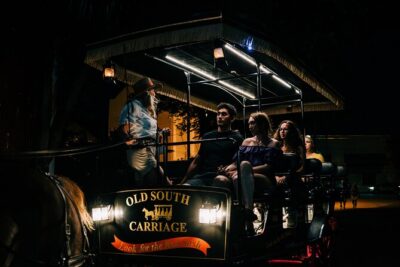 ★ 4.5Haunted Evening Horse and Carriage Tour of CharlestonFrom $503,678 reviews
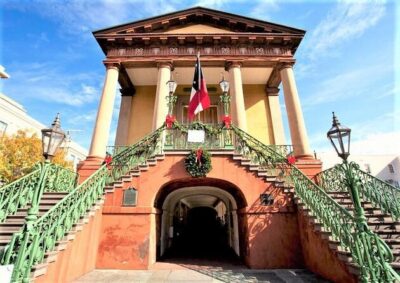 ★ 5.0Charleston Horse-Drawn Carriage Tour: Explore Historic CharlestonFrom $493,561 reviews
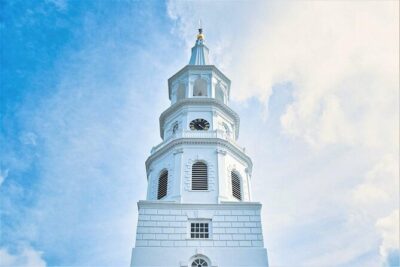 ★ 4.5Ghosts of Charleston Night-Time Walking Tour with Unitarian Church GraveyardFrom $352,835 reviews
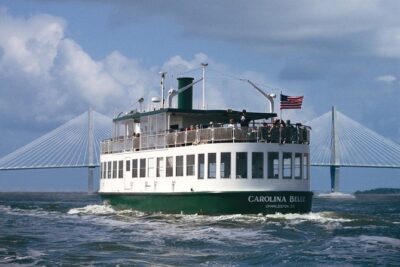 ★ 4.5Charleston Harbor History Day-Time or Sunset Boat CruiseFrom $442,788 reviews
 ★ 5.0Highlights of Charleston Guided Walking Tour2,206 reviews
 ★ 5.0Charleston Eco Boat Cruise with stop at Morris Island Lighthouse2,111 reviews
This one is also listed in