
Review · CHARLESTON HISTORIC TOURS
Lost Stories of Black Charleston Walking Tour
History hits differently on foot. This 2-hour Lost Stories of Black Charleston walk led by author and historian Damon Fordham turns key downtown landmarks into living lessons, including Old Slave Mart Museum. You’ll hear stories that shaped Charleston and the nation, with stops that connect streets, names, and shoreline.
I love the writer-historian-educator style, plus the way the tour blends facts with personal perspective and story craft. Two things also feel like real value here: a small group size, and a route that moves from the market district to the harbor so you get context, not just dates.
One thing to consider: the topic is hard, and the guide’s delivery can be direct, with moments that may feel firm to some people. If you prefer a softer tone, go in expecting serious content and a no-nonsense approach.
In This Review
- Key highlights to know before you go
- Price and pacing: what $39 buys you in Charleston
- Meet at Buxton Books, then hit the streets with Damon Fordham
- If These Streets Could Talk: the story method you’re stepping into
- Charleston City Market, Jehu Jones Hotel site, and Catfish Row (Porgy and Bess)
- Heyward-Washington House: what it means to pass a landmark
- Old Slave Mart Museum: a stop you should plan to sit with
- Waterfront Park and the harbor: tracing slavery through Reconstruction to civil rights
- The storytelling style: strong points and a heads-up
- Practical tips for a comfortable 3:30pm walk
- Who should book this tour, and who might skip it?
- Should you book Lost Stories of Black Charleston?
- FAQ
- Where do I meet for the Lost Stories of Black Charleston walking tour?
- What time does the tour start?
- How long is the walking tour?
- Is the tour offered in English, and do I need a printed ticket?
- Are admissions included for all stops?
- How big is the group?
- Is the tour suitable for children and can service animals attend?
- What is the cancellation policy, and what if weather is poor?
Key highlights to know before you go
- Damon Fordham leads the walk as a licensed tour guide, author, and educator
- A downtown-to-harbor route ties Charleston’s past to the water and the city’s present
- You pass key history markers like Heyward-Washington House and Catfish Row
- Old Slave Mart Museum is part of the experience with admission not included
- Small group size (up to 20) helps the stories stay focused
- You’ll hear about Mother Emanuel A.M. E. Church and other lost narratives
Price and pacing: what $39 buys you in Charleston
For $39, you’re paying for more than a route through pretty blocks. You’re buying a guided narrative that connects Charleston’s Black story to specific locations, with time built in to stop, listen, and make sense of what you’re seeing. That matters because Charleston’s best-known history often gets told through a narrow lens. This tour takes you the other direction, street by street.
The pacing also fits a typical sightseeing window. It runs about 2 hours, and the plan keeps changing the scene: market area, historic homes and sites, then down toward the waterfront. Even when you stop in one spot for a while, the overall flow stays “walk, pause, listen, walk again,” which is exactly how a good walking tour should feel.
Meet at Buxton Books, then hit the streets with Damon Fordham
Your tour starts at 3:30pm at Buxton Books, 160 King St, Charleston, SC 29401. From there, you’ll head through historic neighborhoods on foot and finish back at the same meeting point. Expect a maximum group size of 20, which is big enough to feel lively but small enough that questions and attention can stay personal.
This is narrated in English, using a mobile ticket. If you like tours where the guide clearly knows the subject, this one is built around Damon Fordham’s blend of roles: writer, historian, educator, and licensed tour guide. Reviews also point to his humor and his ability to tie ideas to real people and real consequences, not just facts on a worksheet.
Also, plan on hearing art and history working together. Some guests mention music as part of the presentation, so if you like storytelling that uses more than plain speaking, this format may match your style.
Additional Walking Tours on the review pile in Charleston

If These Streets Could Talk: the story method you’re stepping into
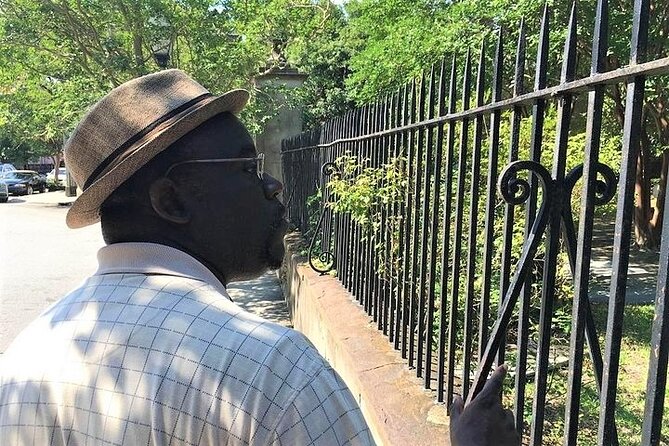
The tour begins with a theme that frames everything that follows: If these streets could talk, and now they will. That line matters because it explains why the walk feels different from standard “look at the building” sightseeing.
Instead of treating Charleston’s Black history like a separate museum topic, the tour makes it part of the city’s daily geography. You’re not just shown where something happened, you’re guided through why the location matters, what got remembered, what got erased, and how power shaped who got a story and who didn’t.
That’s also why the guide leans on both historical context and personal perspective. You’re hearing the past as lived experience, not just background information. You may find the guide corrects or challenges certain assumptions in the moment, which is part of the direct delivery style some people appreciate, and others may find too blunt.
Charleston City Market, Jehu Jones Hotel site, and Catfish Row (Porgy and Bess)
You start with the downtown heart of Charleston: the Charleston City Market. The time here is short, about 30 minutes, but it’s a smart opening. Market streets show you how commerce and community overlap, and the tour uses that energy as a springboard into larger questions about who had access, who was exploited, and who built the city’s economy.
From there you move to the Jehu Jones Hotel site and then to Catfish Row, famously connected to Porgy and Bess. What makes this stop worth your time is how the tour treats pop-culture references as a doorway, not the final answer. You get a chance to look at how Charleston shows up in storytelling, and then you connect that to real local history and the people whose lives sat behind the narrative.
A practical note: the City Market stop is listed as free for admission, so you’re not dealing with ticket logistics in the early part of the tour. It keeps the pacing easy and lets you focus on listening.
Heyward-Washington House: what it means to pass a landmark
Next you’ll spend about 10 minutes at the Heyward-Washington House area. The tour notes it belongs to Thomas Heyward Jr., a signer of the Declaration of Independence, and you’ll pass by rather than get a full long visit.
This can feel quick if you’re the type of traveler who wants deep time in every building. But the point of the brief stop is clever: it forces you to hold two truths at once. A famous founding-era name is right here, and yet the Black story of Charleston runs alongside those same spaces. That contrast helps you understand how “nation history” and “local history” overlap, and how often the harder story gets pushed out of the frame.
The admission for this stop is marked as not included, so treat this as a landmark moment first, and if you want more than what’s outside, you can decide on your own time.
Old Slave Mart Museum: a stop you should plan to sit with
The tour then heads to the Old Slave Mart Museum, where slave auction galleries once operated downtown. You’ll spend about 15 minutes here, and this is one of the most emotionally heavy stops on the walk.
Admission is not included, so if you want to go inside for your visit, you’ll need to plan for that on the spot. Either way, your time here is framed as remembrance, not sightseeing. Expect the guide to connect what happened in that space to the bigger story of how Charleston’s Black residents were controlled, forced into systems, and later rebuilt their lives through freedom and activism.
This stop is also why the overall tour feels valuable. When a walking tour includes a location like this and still connects it to later eras, it keeps the story honest and continuous. You’re not just learning about slavery in isolation, you’re tracking what came after, and how the effects lasted.
More filed under Charleston Historic Tours in Charleston




Waterfront Park and the harbor: tracing slavery through Reconstruction to civil rights
The final stretch is where the tour gains a lot of meaning. You’ll spend about 30 minutes at Charleston Waterfront Park. It’s a free admission stop, and the walk follows a line of history that moves from slavery, through Reconstruction, and toward civil rights.
That arc is not just a timeline. It’s a way to see the city as a system that changed, resisted, and redefined itself over time. And because you also walk along toward the Charleston Harbor area, the tour gives you a geography lesson too. Water is transportation, trade, escape, and border. The tour uses the shoreline as part of the storytelling, not just a scenic end.
Many visitors like that this phase feels like closure without feeling like a lecture ends. You get the sense that the story continues beyond the tour, into what you notice later in Charleston. It’s the kind of ending that makes you look back at earlier stops with new context.
The storytelling style: strong points and a heads-up
This tour earns its high marks for story craft and research depth paired with personal ties. Damon Fordham’s background as an author and adjunct professor shows up in the way he organizes ideas, answers questions, and keeps the group oriented. Multiple reviews also mention that he mixes seriousness with humor and can use music, so the tone is not one-note.
That said, there’s a fair consideration to keep in mind. One review points out that the guide’s delivery can come across as abrasive, including scolding or corrections. Another mentions a theatrical approach like dual voices. If you’re the kind of traveler who wants gentle pacing all the way through, this style might not land the way you hoped.
I’d treat that as a “match your expectations” issue, not a dealbreaker. The tour’s goal is remembrance and truth-telling, and that can sound direct when the subject is painful.
Practical tips for a comfortable 3:30pm walk
A few things will make your experience smoother, even if you’re not a “tour person.”
- Wear good walking shoes. It’s a walking tour through downtown blocks and along park paths.
- Bring water. Charleston afternoons can be warm, and you’ll be outside for most of the outing.
- Plan for at least two paid sites. Heyward-Washington House and Old Slave Mart Museum list admission as not included, while City Market and Waterfront Park are free.
- Go with curiosity, not a checklist. The most rewarding parts are often the connections the guide makes while you’re between landmarks.
- Ask questions if you have them. With a small group cap of 20, you can usually get a direct answer instead of a generic “tour script” response.
If you’re booking in advance, note that this tour is commonly reserved about 13 days ahead on average. That’s a hint that spots can go fast during peak travel windows.
Who should book this tour, and who might skip it?
You’ll likely love this tour if you want Charleston that goes beyond the postcard version. It fits well if you care about how history connects to real places, and you like guides who teach through story and structure. Families, couples, and solo travelers can all fit, and children must be with an adult.
If you’re looking for light sightseeing with minimal heavy content, this might feel too serious. The Old Slave Mart Museum stop and the broader storyline can land as emotionally intense. Also, the guide’s direct delivery style may not suit everyone.
Should you book Lost Stories of Black Charleston?
If you’re spending one or two days in Charleston and want to make sure your experience includes the Black story in a location-based way, I think this is an easy yes. For $39, you get a focused route, a small group feel, and a guide with serious credentials and story skills.
Book it if you’re ready to listen closely, sit with difficult history, and leave with a sharper understanding of what Charleston is built on. Skip it only if you strongly prefer gentle, purely descriptive tours with no emotional intensity and no direct conversation.
FAQ
Where do I meet for the Lost Stories of Black Charleston walking tour?
You’ll meet at Buxton Books, 160 King St, Charleston, SC 29401.
What time does the tour start?
The tour meets at 3:30pm.
How long is the walking tour?
It lasts about 2 hours.
Is the tour offered in English, and do I need a printed ticket?
The tour is offered in English, and it uses a mobile ticket.
Are admissions included for all stops?
No. Charleston City Market and Charleston Waterfront Park are listed as free admission stops. Heyward-Washington House and Old Slave Mart Museum have admission listed as not included.
How big is the group?
The tour has a maximum of 20 travelers.
Is the tour suitable for children and can service animals attend?
Children must be accompanied by an adult. Service animals are allowed. Most travelers can participate.
What is the cancellation policy, and what if weather is poor?
You can cancel for a full refund up to 24 hours in advance. If the tour is canceled due to poor weather, you’ll be offered a different date or a full refund.
Still working through Walking Tours in Charleston
- Historic Charleston Guided Sightseeing Walking Tour★ 5.0 · 6,216 reviews
- Ghosts of Charleston Night-Time Walking Tour with Unitarian Church Graveyard★ 4.5 · 2,835 reviews
- Hidden Alleyways and Historic Sites Small-Group Walking Tour★ 5.0 · 2,335 reviews
- Highlights of Charleston Guided Walking Tour★ 5.0 · 2,206 reviews
- Charleston Haunted Booze and Boos Ghost Walking Tour★ 5.0 · 1,569 reviews
Tours: the rest of the Charleston file
- Charleston’s Old South Carriage Historic Horse & Carriage Tour★ 5.0 · 10,023 reviews
- Historic Charleston Guided Sightseeing Walking Tour★ 5.0 · 6,216 reviews
- Haunted Evening Horse and Carriage Tour of Charleston★ 4.5 · 3,678 reviews
- Charleston Horse-Drawn Carriage Tour: Explore Historic Charleston★ 5.0 · 3,561 reviews
- Fort Sumter Admission and Self-Guided Tour with Roundtrip Ferry★ 4.5 · 3,343 reviews
Tour Reviews: more from our Charleston desk
- Charleston’s Old South Carriage Historic Horse & Carriage Tour★ 5.0 · 10,023 reviews
- Historic Charleston Guided Sightseeing Walking Tour★ 5.0 · 6,216 reviews
- Haunted Evening Horse and Carriage Tour of Charleston★ 4.5 · 3,678 reviews
- Charleston Horse-Drawn Carriage Tour: Explore Historic Charleston★ 5.0 · 3,561 reviews
- Fort Sumter Admission and Self-Guided Tour with Roundtrip Ferry★ 4.5 · 3,343 reviews
Newest Charleston reviews added to this site
- Paranormal Investigation: YOU are the Ghost Hunter
★ 5.0 · 310 reviews - Charleston History and Hops Tour: Bar and History Walk
★ 5.0 · 316 reviews - Middleton Place Admission with Self Guided Tour and Lunch
★ 4.5 · 326 reviews - Sip History in The Sun Cabana Covered Cocktail Class
★ 5.0 · 332 reviews - Private Daytime Horse-Drawn Carriage Tour of Charleston
★ 5.0 · 340 reviews - Charleston’s Historic Downtown Food Tour
★ 4.5 · 349 reviews - Charleston: History and Architecture Guided Walking Tour
★ 4.8 · 349 reviews - The Death and Depravity Ghost Tour in Charleston
★ 4.5 · 371 reviews - Charleston in a Nutshell Private Tours
★ 5.0 · 375 reviews - Charleston History Tour /
★ 5.0 · 388 reviews
Charleston Historic Tours, side by side.
 ★ 5.0Charleston’s Old South Carriage Historic Horse & Carriage TourFrom $5010,023 reviews
 ★ 5.0Historic Charleston Guided Sightseeing Walking TourFrom $306,216 reviews
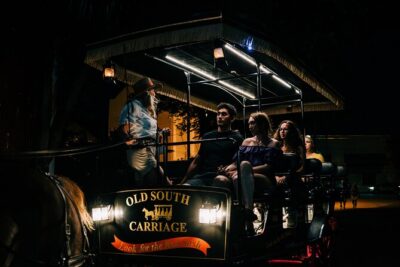 ★ 4.5Haunted Evening Horse and Carriage Tour of CharlestonFrom $503,678 reviews
 ★ 5.0Charleston Horse-Drawn Carriage Tour: Explore Historic CharlestonFrom $493,561 reviews
 ★ 4.5Ghosts of Charleston Night-Time Walking Tour with Unitarian Church GraveyardFrom $352,835 reviews
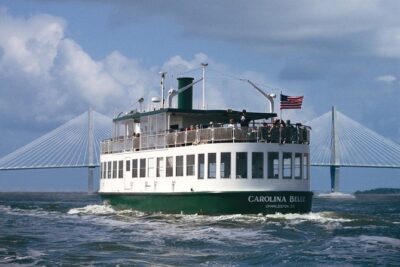 ★ 4.5Charleston Harbor History Day-Time or Sunset Boat CruiseFrom $442,788 reviews
 ★ 5.0Highlights of Charleston Guided Walking Tour2,206 reviews
 ★ 5.0Charleston Eco Boat Cruise with stop at Morris Island Lighthouse2,111 reviews
This one is also listed in