

Review · CHINATOWN AND LITTLE ITALY TOURS
SoHo, Little Italy, and Chinatown 2-Hour Guided Walk
Three neighborhoods, one nonstop story.
This 2-hour walk stitches together SoHo, Little Italy, and Chinatown in a way that feels real, not theme-park-ish. You’ll move block by block through streets tied to immigration, neighborhood reinvention, and crime, with a side of celeb-spotting in SoHo.
I especially like the contrast. In SoHo, you’re pointed toward the Cast Iron district and the kind of architectural landmarks that people come to photograph, then you pivot to darker street-corner tales in Little Italy and Chinatown. I also like that the guides often bring history to life with pop-culture references, humor, and practical follow-ups that make the places easier to remember.
One drawback to factor in: it’s a walking tour, and it’s not suitable for people with mobility impairments. Also, while you’ll get food moments and ethnic food sampling, food costs are on you.
In This Review
- Key Things You’ll Notice on This Walk
- SoHo to Chinatown in 2 Hours: The Value Math Actually Works
- Spring Street Park and the SoHo Stops That Feel Like NYC Trivia
- The Heath Ledger and Mary Kate Olsen Stop: Pop Culture With an Address
- Little Italy: Cheese-Making Traditions Next to the Triangle Fire Story
- Umberto’s and Joe Gallo: When the Mob Stories Hit the Street
- Chinatown’s Doyers Street and the Bloody Angle
- Columbus Park: A Film-Ready Ending at the Edge of the Story
- What the Guides Do Right, From Arun to Angela to George
- Footwear, Weather, and Getting the Most From a City-Wide Walk
- Price and Logistics: Is $39 a Good Deal for This Much Story?
- Should You Book This SoHo, Little Italy, and Chinatown Walk?
- FAQ
- How long is the SoHo, Little Italy, and Chinatown guided walk?
- How much does it cost?
- Where does the tour start and where does it end?
- Is the tour guided, and what language is it in?
- Does the tour include food?
- What should I bring?
- Is this tour suitable for people with mobility impairments?
- Can I cancel and get a full refund?
- Is there a pay-later option?
- What’s the weather impact on this experience?
Key Things You’ll Notice on This Walk
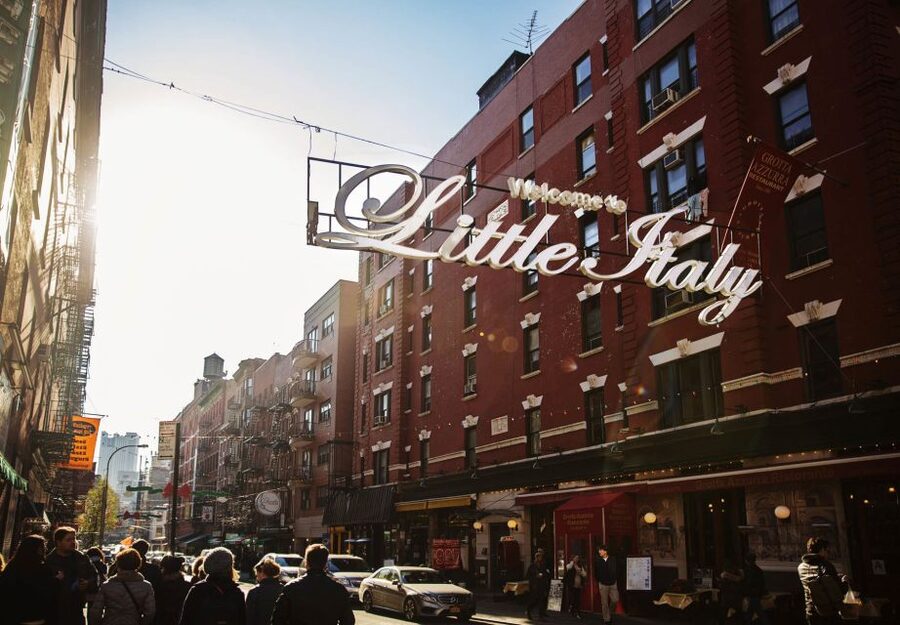
- SoHo’s Cast Iron district and movie-star vibes in a compact stretch of streets
- Greene and Spring street crimes, including the Manhattan Well murder tied to early NYC records
- Little Italy stops like Alleva Dairy and the Italian American Museum, linking daily life to major events
- Chinatown street corners tied to gang violence and true-crime lore, including Doyers Street and an opium-den story
- Big-name history points, from the E.V. Haughwout safety elevator to John Gotti at the Ravenite Club
SoHo to Chinatown in 2 Hours: The Value Math Actually Works
This tour is priced at $39 per person for a 2-hour guided walk, so you’re basically paying for a focused guide who can connect the dots across three neighborhoods without you needing to research for hours first. In a city where “walk and read plaques” can get boring fast, the payoff here is that the guide turns streets into context.
What makes the time work is the structure. You get three segments of about 40 minutes each, so you’re not stuck in one area too long. And because the route includes a long list of specific landmarks, you end up seeing more than you would on your own without a plan.
There’s also a practical benefit. If you like to start a trip with orientation, this walk helps you find the pattern of New York in miniature. You’ll see how immigrant communities, business streets, and entertainment districts sit next to each other, and how the city’s public life has always carried tensions along with the glamour.
Spring Street Park and the SoHo Stops That Feel Like NYC Trivia
If you start at Spring Street Park, you’re beginning in the kind of neighborhood node where people often just pass through. The guide keeps you looking forward instead. In SoHo, you’re guided toward the historic street geometry and the architecture that made this area famous with photographers and fashion crowds.
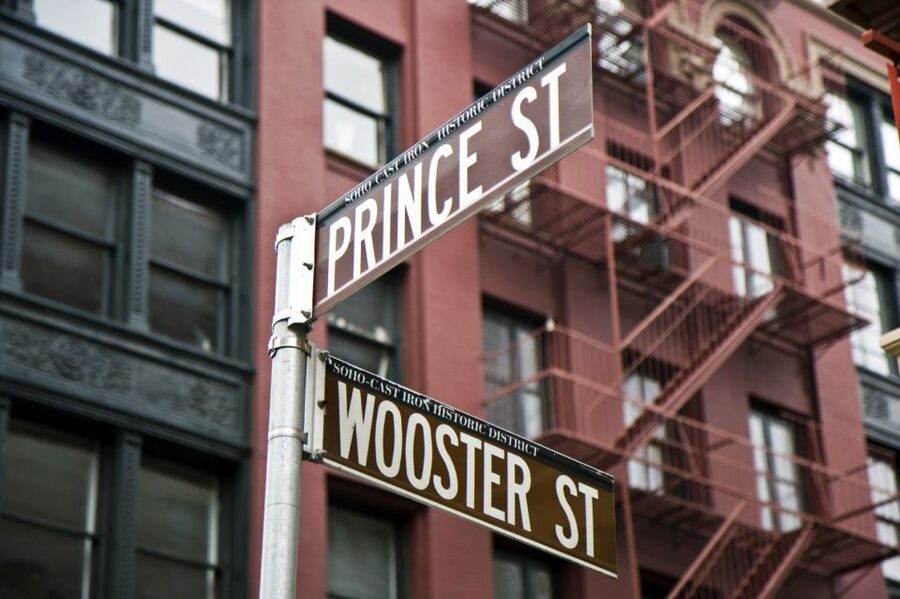
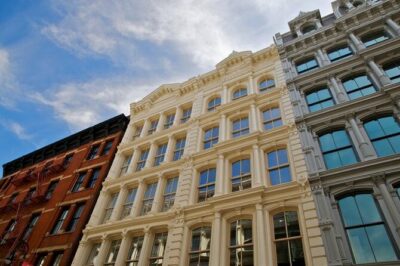
The big “wow” stop is the Cast Iron district. Expect the classic cast-iron facades that scream New York at first glance. The tour also leans into the idea of SoHo as a place where you might see celebrities, fashion people, and the film-ready look that draws attention to the street.
Then the walk gets more interesting, because SoHo is not just pretty buildings. You’ll be pointed toward Greene and Spring streets, tied to the Manhattan Well murder, which is described as the first recorded murder case in NYC. That kind of fact changes the way you read the block. Instead of thinking only about the aesthetics, you notice the city’s density and how quickly crowds can move past tragedy.
A standout engineering and design moment is the E.V. Haughwout Building, noted as home to the first safety elevator. Even if you’re not a history nerd, this is the kind of detail that explains why buildings, and neighborhoods, could grow the way they did.
The rest of our Guided notes for New York City

The Heath Ledger and Mary Kate Olsen Stop: Pop Culture With an Address
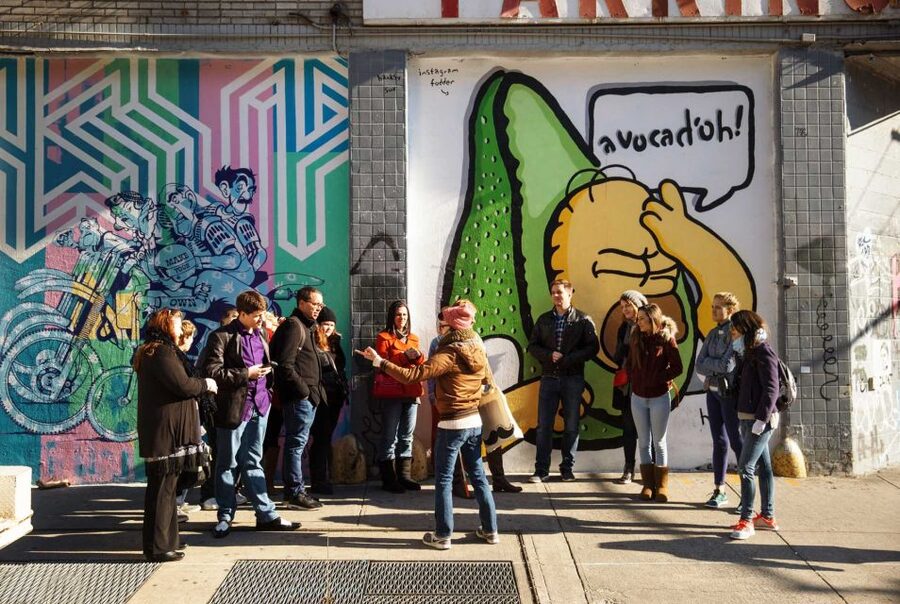
This tour does something smart with celebrity stories. It doesn’t treat them as gossip. It uses them as location anchors so you can picture the city in a concrete way.
One address highlighted is 421 Broome Street, connected to Heath Ledger’s death, described as occurring in Mary Kate Olsen’s apartment. It’s a heavy fact, and the value is that you learn it in context of the surrounding area rather than as a random trivia item.
If you like film and TV, you’ll probably enjoy the way the guide ties pop culture back to physical places. And if you do not care about celebrity news, you can still use the same approach: the address matters because it helps you connect the SoHo area you’re seeing now to the New York that existed in the stories.
This is also where that “look up and notice” habit pays off. You stop scanning only for photos and start seeing street patterns, entrances, building types, and the general scale of the neighborhood. That’s a real skill in a city that can feel endless.
Little Italy: Cheese-Making Traditions Next to the Triangle Fire Story
When the walk shifts into Little Italy, it feels like the city changes mood. The streets and storefront vibe are more family-and-food focused, and the guide leans into that. You’ll pass through areas around Mulberry Street, which is framed as the heart of Little Italy.
One of the most grounded stops is Alleva Dairy. The tour points out that cheese has been made there for about a hundred years. That detail matters because it anchors the neighborhood in daily work, not only in headlines. It’s the kind of place where you can taste the continuity, even if you skip a snack.
From there, you move into heavier territory with the Italian American Museum, described as the site of the Triangle Shirtwaist Factory fire. It’s an emotional subject, but it’s also a turning point in NYC labor and immigration narratives. Seeing it as part of a neighborhood walk helps you understand why these streets are layered with both aspiration and loss.
The tour also includes Old Saint Patrick’s, plus other notable points along the way, and it connects community identity to places you can actually stand in front of.
Umberto’s and Joe Gallo: When the Mob Stories Hit the Street
Little Italy in particular is where the tour’s true-crime edge becomes clearer. You’re guided to Umberto’s, framed as the site of the mob hit on Joe Gallo.
There’s a reason this lands in a neighborhood walk rather than a museum-only setting. Outdoors, you see scale and distance. You understand how public spaces can feel normal, even when the surrounding area carried fear. The guide’s job is to keep the story from becoming sensational by adding context about the neighborhood forces behind it.
Another serious stop on the broader route is Ravenite Club, tied here to the story of John Gotti. If you like crime stories but hate shallow retellings, this is the kind of framing that makes the walk more meaningful than a generic “gangland” playlist.
Chinatown’s Doyers Street and the Bloody Angle
Then comes Chinatown, and the vibe shifts again. The guide points out places tied to Chinese gang violence, plus specific street legends and locations.
One of the most iconic spots in the itinerary is Bloody Angle, connected to Doyers Street. It’s the kind of location where a “small” street corner can have outsized notoriety. Standing there with a guide is useful because you learn why the street layout is part of the story, not just the name.
You’ll also hear a story about an opium den. Since this is presented as part of the neighborhood history, the value is that you connect the name to how Chinatown’s street life and reputation formed over time.
Another major religious and cultural stop is the National Shrine Church of San Gennaro, where the itinerary references the story of the liquefaction of the saint’s blood. Even if you don’t know the tradition ahead of time, this is an example of how Chinatown is not only about food and shopping, it’s also about faith, ritual, and community continuity.
Additional Walking Tours on the review pile in New York City




Columbus Park: A Film-Ready Ending at the Edge of the Story
The walk wraps with drop-off at Columbus Park, described as tied to Gangs of New York fame. Even if you haven’t seen the movie, the park is a good place to reset and grab a breath after the dense run of streets and stories.
I like an ending like this because it gives you a clean mental bookmark. You’ve walked from architectural power and celebrity addresses in SoHo, to labor tragedy and neighborhood identity in Little Italy, and then to gang-era street lore and cultural landmarks in Chinatown. Ending with a place that references film helps you remember the whole arc.
What the Guides Do Right, From Arun to Angela to George
The guide quality is the difference between a forgettable walk and a walk you keep thinking about later. Across guide examples mentioned for this tour, the common thread is delivery style: high energy, clear explanations, and a willingness to answer questions.
Names that show up in the guide mix include Arun, Angela, George, Filip, Felipe, Jacob, Ari, Verena, Alex, Steve, and Mindy. What ties them together in the pattern of feedback is that they connect street-level detail to the bigger story and often use pop culture as a shortcut to help you remember.
A few specific strengths you can look for when you join:
- Humor that doesn’t dilute the facts
- A pace that feels manageable, even on a hot day
- Extra attention to safety, including watching traffic
- Practical food pointers, like where to find pizza and cannoli nearby
If you’re the type who likes to ask questions, this tour tends to support it. That matters, because the best part of walking tours is not the monologue, it’s the back-and-forth when the guide can explain what you’re staring at.
Footwear, Weather, and Getting the Most From a City-Wide Walk
This is not a “sit and learn” experience. It’s a 2-hour walking route, so bring comfortable shoes and weather-appropriate clothing. Since it’s not suitable for mobility impairments, plan on lots of time on your feet and normal NYC sidewalk conditions.
One practical tip: dress like you’ll be outside the whole time, because you will. If it’s hot, cold, or rainy, you’ll want layers or protection so you can stay focused on the guide instead of thinking only about discomfort.
Also, because the tour includes food moments but does not include food costs, it’s smart to carry a small budget for snacks. You might take the chance to try something after the guide points you toward it, especially around Little Italy.
Price and Logistics: Is $39 a Good Deal for This Much Story?
For $39, you’re buying a guided interpretation across three neighborhoods, plus a stop list that includes both high-interest landmarks and the kind of dark history that most people would otherwise skip or misunderstand.
Here’s why the value is strong:
- You get multiple “category types” in one route: architecture, immigration-era struggle, gang violence, and cultural and religious sites.
- You get time anchors, about 40 minutes per neighborhood segment, so you don’t feel lost.
- You get guide storytelling that tends to be energetic and question-friendly, which is what makes the facts stick.
When might it not be the best choice? If you already have your own carefully planned routes and you love wandering without interpretation, you could recreate parts of the walk on your own. But if you want your first pass through NYC neighborhoods to feel organized and meaningful, this is a very efficient way to do it.
Should You Book This SoHo, Little Italy, and Chinatown Walk?
Book it if you want a guided plan that covers architectural icons, immigrant and labor context, and real street-corner crime stories without turning it into a lecture.
Skip it if you’re uncomfortable with walking, since it’s not suitable for people with mobility impairments. Also skip it if you hate true-crime topics in general, because the route includes stories tied to gang violence and mob incidents.
If you’re on a first trip to New York or you want a fast way to understand how these neighborhoods developed side by side, this walk is one of the cleaner uses of two hours in Manhattan. You’ll leave with addresses and street layouts in your head, plus food ideas that are easier to act on right after the tour.
FAQ
How long is the SoHo, Little Italy, and Chinatown guided walk?
The tour lasts 2 hours.
How much does it cost?
It costs $39 per person.
Where does the tour start and where does it end?
The starting meeting point may vary depending on the option booked, and there are starting location options that include Spring Street Park. The drop-off location is Columbus Park.
Is the tour guided, and what language is it in?
Yes, it includes a walking tour with an English-speaking tour guide.
Does the tour include food?
Food costs are not included. The tour may include food-related sampling moments, but you should plan on paying for what you eat.
What should I bring?
Bring comfortable shoes and weather-appropriate clothing.
Is this tour suitable for people with mobility impairments?
No, it is not suitable for people with mobility impairments.
Can I cancel and get a full refund?
Yes, you can cancel up to 24 hours in advance for a full refund.
Is there a pay-later option?
Yes. You can reserve now and pay later, with pay nothing today.
What’s the weather impact on this experience?
The tour is outdoors on foot, so you’ll want weather-appropriate clothing to stay comfortable for the full walk.
Still working through Walking Tours in New York City
- SoHo, Little Italy, and Chinatown Walking Tour in New York★ 5.0 · 3,153 reviews
- Secrets of Grand Central Station Walking Tour New York City★ 5.0 · 1,796 reviews
- Greenwich Village Walking and Food Tasting Tour★ 5.0 · 1,572 reviews
- Artistic, Alternative Greenwich Village Walking Tour★ 5.0 · 971 reviews
- True Crime NYC: Mafia Walk w/Ret. NYPD Detective and Local Food★ 5.0 · 848 reviews
Guided reviewed right across New York City
- New York in One Day Guided Sightseeing Tour★ 5.0 · 13,166 reviews
- Central Park Pedicab Guided Tours★ 5.0 · 7,108 reviews
- From NYC: Guided Day Trip to Washington DC by Van or Bus★ 4.7 · 3,418 reviews
- NYC: Statue of Liberty and Ellis Island Guided Tour★ 4.6 · 2,765 reviews
- Original NYC Guided Food Tour of Chinatown and Little Italy★ 5.0 · 2,194 reviews
Tour Reviews: more from our New York City desk
- NYC: SUMMIT One Vanderbilt Tickets★ 4.7 · 51,195 reviews
- NYC: Empire State Building Tickets – Observatory & Museum★ 4.7 · 25,757 reviews
- New York City: Statue of Liberty & Ellis Island with Ferry★ 4.6 · 18,683 reviews
- New York City: American Museum of Natural History Ticket★ 4.5 · 15,447 reviews
- Statue of Liberty and Ellis Island Tour: All Options★ 5.0 · 13,571 reviews
Newest New York City reviews added to this site
- NYC: Whitney Museum Ticket
★ 4.2 · 315 reviews - NYC: Manhattan & Statue of Liberty Cruise with Shuttle Bus
★ 4.6 · 316 reviews - 60-Minute Statue of Liberty Sightseeing Cruise
★ 3.0 · 317 reviews - True Crime New York: NYPD-Guided Mafia Walking Tour w/ Food
★ 4.6 · 318 reviews - New York City Cocoa and Carols Holiday Cruise
★ 4.5 · 318 reviews - Harlem Wednesday Morning Gospel Tour
★ 4.5 · 320 reviews - Central Park Bike Rental: Quality Bikes with Map, Helmet, Lock
★ 4.0 · 324 reviews - New York City Harlem Highlights w/ Gospel Concert & Transfer
★ 4.5 · 326 reviews - 9/11 Memorial Tour with Optional Museum and One World Access
★ 5.0 · 330 reviews - New York City Sunset Cruise on a Yacht
★ 5.0 · 331 reviews
Chinatown and Little Italy Tours, side by side.
 ★ 5.0SoHo, Little Italy, and Chinatown Walking Tour in New YorkFrom $393,153 reviews
 ★ 5.0NYC: Chinatown & Little Italy Food Tour with 7 Flavorful TastingsFrom $992,733 reviews
 ★ 5.0Original NYC Guided Food Tour of Chinatown and Little ItalyFrom $1302,194 reviews
 ★ 5.0Chinatown & North BeachLittle Italy: 7 Tastings & HistoryFrom $961,070 reviews
 ★ 5.0North Beach & Little Italy Walking Tour: Food, History & FlavorFrom $861,044 reviews
 ★ 5.0Ghost Hunt in SF Chinatown with a Professional InvestigatorFrom $55922 reviews
 ★ 5.0Taste of Little Italy in San DiegoFrom $93869 reviews
 ★ 5.0San Francisco Chinatown Walking TourFrom $59778 reviews
This one is also listed in