
Review · WALKING TOURS
Artistic, Alternative Greenwich Village Walking Tour
Greenwich Village turns into a storybook here. This walking tour mixes local guide storytelling with pop-culture history you cannot see from a map, covering more than 200 years in just about two hours. You will walk past brownstones, bars, and the small, real places where famous names and big ideas took shape.
You start near 6th Avenue and Waverly Place, then wind toward Washington Square Park, where a short audio stop adds extra context and atmosphere. You end at Village Cigars, which is a very on-brand finish for a neighborhood that still runs on regulars, regular streets, and regular details.
The main drawback is simple: it is a moderate walk (about 2 to 3 miles) and it runs in all weather, so bring comfortable shoes and plan for the day’s conditions.
In This Review
- Key highlights at a glance
- Greenwich Village, but make it art, music, and protest
- Where you start near 6th Ave and how the walk flows
- Poe, Dylan Thomas, and the Village’s writing energy
- Counterculture on the sidewalks: Reed and Sinclair
- Music legends in small places where it really happened
- Gay rights movement landmarks, and why the Village mattered
- Washington Square Park: a calm pause with extra context
- A good guide makes or breaks a walking tour
- What about the walking pace and weather?
- Wheelchair and stroller access, plus who this fits best
- Price and value: $39 for a guide plus a story-driven route
- So, should you book this Artistic, Alternative Greenwich Village tour?
- FAQ
- What is the price and duration of the Artistic, Alternative Greenwich Village Walking Tour?
- Where does the tour start and end?
- How much walking is involved?
- Is the tour wheelchair and stroller accessible?
- Does the tour run in bad weather?
- What language is the tour offered in?
- Is free cancellation available?
Key highlights at a glance
- Pop-culture legends, placed on actual corners like Edgar Allan Poe, Bob Dylan, and Jimi Hendrix
- Gay rights movement landmarks discussed as part of the neighborhood’s real story
- Washington Square Park with an audio stop, including the cemetery background
- Small-group feel with a max of 20 people, led by a professional local guide
- Easy to follow route, with a guide out front so you do not get lost
Greenwich Village, but make it art, music, and protest
Greenwich Village has always been more than a postcard. On this tour, you are not just seeing pretty streets. You are seeing how ideas, art, and music collided in a place where people tested new ways to live and think.
What makes the tour feel different is the mix of names and themes. Yes, you will hear about Edgar Allan Poe and Dylan Thomas. But you will also connect the neighborhood to counterculture thinkers and social change, including how parts of the gay rights movement took root here. That combination matters, because it explains why the Village keeps pulling artists and misfits in generation after generation.
And since the route is built for walking, you get the rhythm of the area: stoops, storefronts, back-to-back buildings, and the kind of blocks that do not show up in a quick bus stop.
Where you start near 6th Ave and how the walk flows
You meet at 375A 6th Ave, New York, NY 10014 with the tour beginning at 1:30 pm. From there, the guide leads you through the Village’s famous streets, with enough structure that you can focus on the stories instead of constantly checking your phone.
This is a short commitment, about 2 hours total, with a short audio component at Washington Square Park. The walking is rated moderate, around 2 to 3 miles, which is manageable for most people if you wear decent shoes and pace yourself.
Group size is capped at 20, which is a big deal in New York. It generally means you can actually hear the guide, ask questions, and keep your attention on the sidewalk rather than tuning out because the crowd is too tight.
Additional Walking Tours on the review pile in New York City

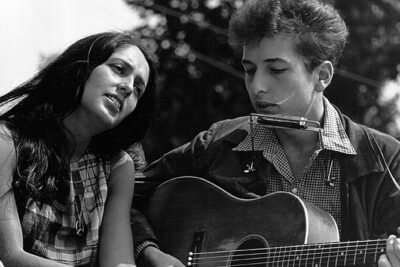
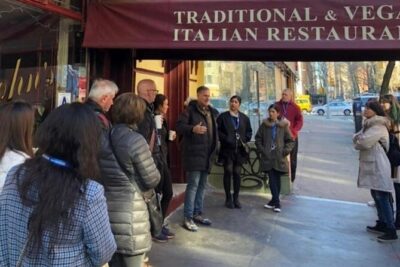
Poe, Dylan Thomas, and the Village’s writing energy
The Village has a talent for making writing feel physical. As you move through the neighborhood, the stories point to the places where people like Edgar Allan Poe lived and wrote, and where Dylan Thomas drank himself to death, according to the tour’s telling.
These are not just trivia facts. They help you understand why certain themes show up in Village culture so often: loneliness and glamour, rebellion and romance, creativity that is equal parts discipline and chaos. Even if you are only casually familiar with these writers, the tour gives you context you can carry into other neighborhoods later.
A practical benefit here: once you start seeing the Village through this lens, you will naturally notice details while you explore on your own afterward. That is how a tour like this keeps paying off after the walk ends.
Counterculture on the sidewalks: Reed and Sinclair
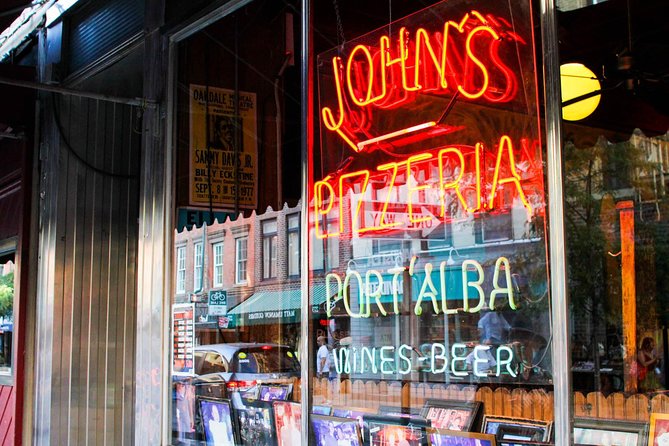
This is where the tour stops being just literary and starts feeling political. The guide connects the Village to early counterculture movements and names like John Reed and Upton Sinclair.
Why you should care: social movements do not start in textbooks. They start in networks. They start in conversations. They start in neighborhoods where people gather, argue, publish, and organize. The tour’s payoff is that you can connect the abstract word counterculture to real geography, instead of thinking of it as something that happened in some far-off era with no street address.
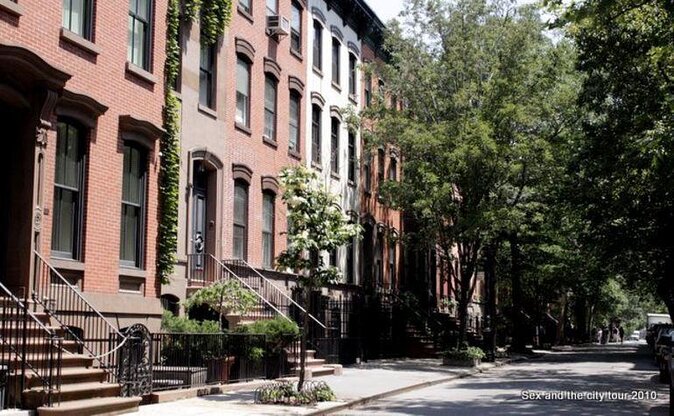
You will also see the Village’s famous brownstone character, which helps the neighborhood feel grounded. The architecture and the stories reinforce each other, especially when the guide talks about how the area has changed over time.
Music legends in small places where it really happened
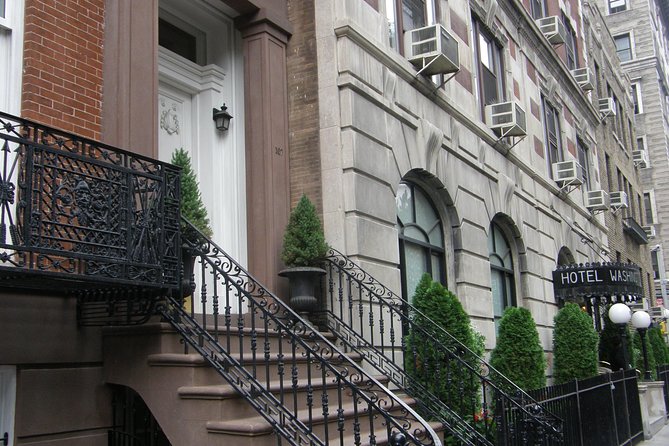
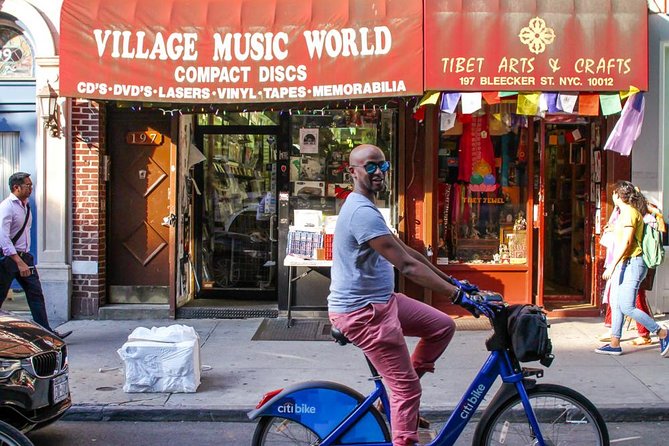
The Village is famous for big cultural output, but the tour focuses on the small stages where that output grew.
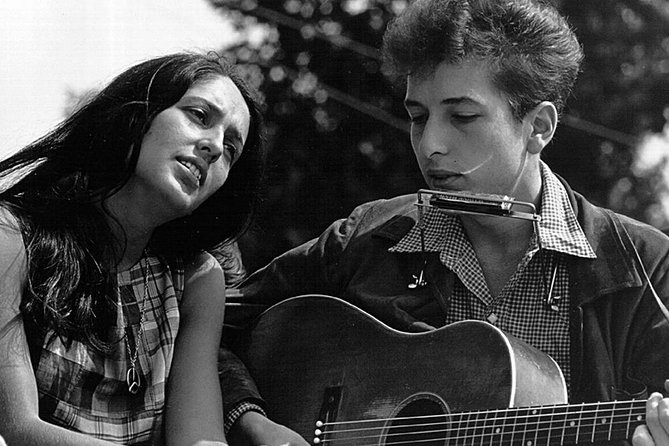
You will hear about how Bob Dylan and Jimi Hendrix played in smaller clubs and helped create some of their best music here. The point is not to claim every song was written on that exact block. The point is to show you the environment that supported creative risk.
When you learn that sort of thing while you are standing nearby, it changes how you interpret the neighborhood today. You start to notice the kinds of venues that fit that history, and you understand why musicians kept coming back to the Village even as trends changed.
Gay rights movement landmarks, and why the Village mattered
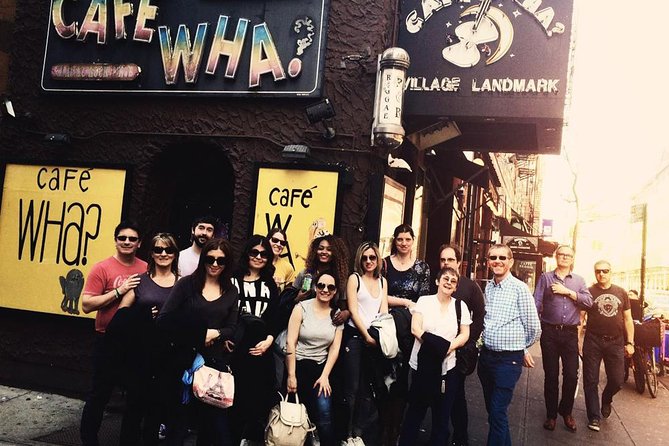
One of the standout themes is the tour’s attention to the origins and presence of parts of the gay rights movement in the Village. You will pass landmarks and hear stories tied to how activism developed in this neighborhood.
This is one of those topics where a guided walk actually helps. You are dealing with history that can be easy to miss if you are only looking for flashy attractions. A guide adds the missing connective tissue, turning a list of streets into a timeline of real people pushing for change.
It also gives the Village a deeper, more honest feel. The neighborhood’s artistic reputation is not separate from its social evolution, and this tour does a good job keeping those threads tied together.





Washington Square Park: a calm pause with extra context
Near the end, you reach Washington Square Park, and this is where you slow down.
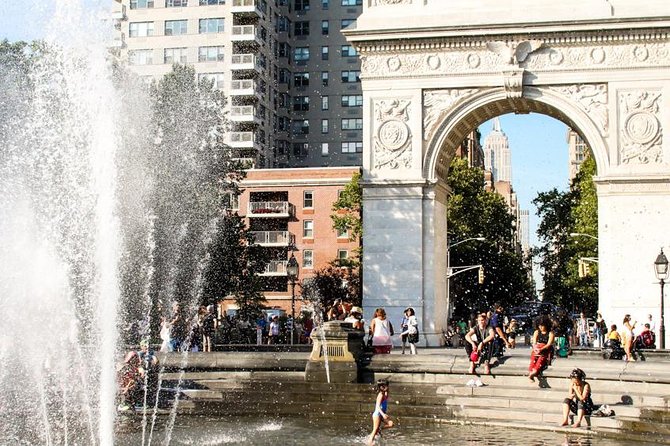
The tour includes an audio tour stop (about 15 minutes) at the park. A key detail you are given: the park was built atop a forgotten cemetery. That adds a layer of meaning to a place that many people treat like just a meeting spot.
Even if you have been to Washington Square before, taking this moment as a structured part of your walk makes the space feel different. You look around with a question in mind, not just an Instagram instinct.
From there, the tour ends near Christopher Street and 7th Avenue, at Village Cigars (110 7th Ave S). It is a fitting end point, because it keeps the theme of real local institutions rather than ending on a busier tourist strip.
A good guide makes or breaks a walking tour
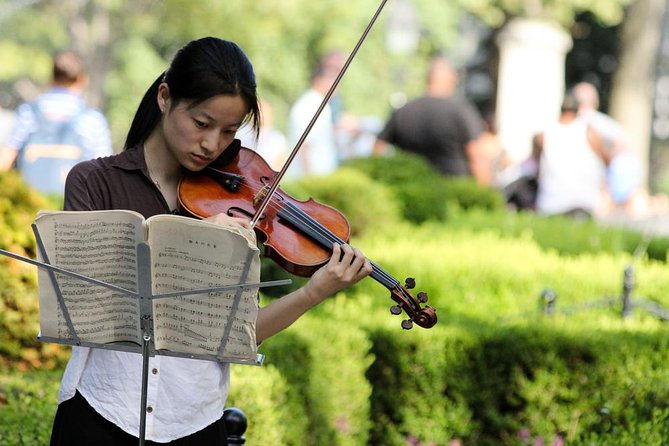
The reviews and the overall design both point to one big idea: the tour lives and dies by its guides. In particular, guides like Angela Sharp and long-time locals such as Steve are praised for energy, clarity, and perspective.
Here are the kinds of things you can reasonably expect when the guide is firing on all cylinders:
- Personal touches tied to life in the neighborhood, especially when guides talk about how the Village has changed
- Humor and pacing that keep the stories moving, not stuck in lecture mode
- Helpful follow-ups, including written recommendations emailed after the walk in some cases
- Flexible attention at the start, with guides asking what you want to see and adjusting what they emphasize
I also like the variety of guide styles that show up in the tour’s ecosystem. Some guides use extra materials like photos (one guide is noted for bringing a binder). Another guide is noted for pointing out a famous local attraction in Washington Square Park, which is the kind of detail you would never spot on your own.
Bottom line: if you enjoy conversation-led history and you like your tours to feel human, this is the right format.
What about the walking pace and weather?
This tour is built for comfort-with-structure. Expect about 2 to 3 miles total at a moderate pace, with a short audio pause included. You should wear comfortable shoes, because the Village streets are not always level in a way your feet will love.
It also runs in all weather conditions, so plan based on the forecast. If the day is cold, windy, or rainy, dress appropriately, bring a layer, and keep water and snacks in mind if you tend to get hungry between meals.
The good news for planning: the route is led by a local guide, so you are not navigating complex turns. You will spend your attention on the stories and the neighborhood vibe.
Wheelchair and stroller access, plus who this fits best
This tour is listed as accessible for strollers and wheelchairs. That matters, because not all neighborhood walking tours are really usable for everyone.
Most people can participate, and the pacing is described as moderate. If you can handle a couple of miles on foot, you are likely fine.
Who it suits best:
- First-time visitors who want the Village beyond the headline sights
- Returning visitors who want a different lens on familiar streets
- People who like art, music, and social history as one connected story
- Anyone who enjoys guides who bring the present into the past, not just the past into the past
If you are mainly in NYC for major monuments and iconic skylines, you might prefer a more sight-heavy itinerary. But if you want to understand why the Village shaped culture, this is a strong choice.
Price and value: $39 for a guide plus a story-driven route
At $39 per person for roughly 2 hours, this is priced in line with many New York neighborhood tours. The value comes from what you are getting for that money.
You are paying for:
- A professional local guide (the biggest cost driver on walking tours)
- A focused route through one neighborhood rather than a scattershot hit list
- A theme that connects art, music, and social change, not just one genre
- An audio component at Washington Square Park
Also, the maximum group size of 20 helps protect the experience. In a city where crowds can wreck attention, that matters.
Timing-wise, it is typically booked about 16 days in advance on average, so if you travel in a busy season or on weekends, reserving ahead can help you lock in the slot you want.
So, should you book this Artistic, Alternative Greenwich Village tour?
I think you should book if you want a smart, street-level way to understand the Village. This is ideal for you if you care about how artists and musicians shaped culture, and you also care about the social movements that grew alongside that creative energy.
Skip it if you only want the biggest tourist landmarks with minimal walking and no real interpretive layer. This tour is about people and context, delivered on foot.
If you do book, bring two things: comfortable shoes and curiosity. You will leave with a much clearer idea of why Greenwich Village keeps reinventing itself, and why its streets still feel like a stage for ideas.
FAQ
What is the price and duration of the Artistic, Alternative Greenwich Village Walking Tour?
It costs $39.00 per person and lasts about 2 hours.
Where does the tour start and end?
The tour starts at 375A 6th Ave, New York, NY 10014, and ends at Village Cigars, 110 7th Ave S, New York, NY 10014, near the intersection of Christopher Street and 7th Avenue.
How much walking is involved?
There is a moderate amount of walking, about 2 to 3 miles.
Is the tour wheelchair and stroller accessible?
Yes, this tour is accessible for strollers and wheelchairs.
Does the tour run in bad weather?
Yes, it runs rain or shine. In extreme weather where cancellations are needed, you can reschedule or receive a full refund.
What language is the tour offered in?
The tour is offered in English.
Is free cancellation available?
Yes, you can cancel for a full refund up to 24 hours in advance of the experience start time.
Still working through Walking Tours in New York City
- SoHo, Little Italy, and Chinatown Walking Tour in New York★ 5.0 · 3,153 reviews
- Secrets of Grand Central Station Walking Tour New York City★ 5.0 · 1,796 reviews
- Greenwich Village Walking and Food Tasting Tour★ 5.0 · 1,572 reviews
- True Crime NYC: Mafia Walk w/Ret. NYPD Detective and Local Food★ 5.0 · 848 reviews
- Central Park Guided Walking Tour★ 5.0 · 774 reviews
Tours: the rest of the New York City file
- Statue of Liberty and Ellis Island Tour: All Options★ 5.0 · 13,571 reviews
- New York in One Day Guided Sightseeing Tour★ 5.0 · 13,166 reviews
- Central Park Pedicab Guided Tours★ 5.0 · 7,108 reviews
- New York City: Manhattan Helicopter Tour★ 4.7 · 7,076 reviews
- Private Central Park Pedicab Tour★ 5.0 · 6,981 reviews
Tour Reviews: more from our New York City desk
- NYC: SUMMIT One Vanderbilt Tickets★ 4.7 · 51,195 reviews
- NYC: Empire State Building Tickets – Observatory & Museum★ 4.7 · 25,757 reviews
- New York City: Statue of Liberty & Ellis Island with Ferry★ 4.6 · 18,683 reviews
- New York City: American Museum of Natural History Ticket★ 4.5 · 15,447 reviews
- Statue of Liberty and Ellis Island Tour: All Options★ 5.0 · 13,571 reviews
Newest New York City reviews added to this site
- NYC: Whitney Museum Ticket
★ 4.2 · 315 reviews - NYC: Manhattan & Statue of Liberty Cruise with Shuttle Bus
★ 4.6 · 316 reviews - 60-Minute Statue of Liberty Sightseeing Cruise
★ 3.0 · 317 reviews - True Crime New York: NYPD-Guided Mafia Walking Tour w/ Food
★ 4.6 · 318 reviews - New York City Cocoa and Carols Holiday Cruise
★ 4.5 · 318 reviews - Harlem Wednesday Morning Gospel Tour
★ 4.5 · 320 reviews - Central Park Bike Rental: Quality Bikes with Map, Helmet, Lock
★ 4.0 · 324 reviews - New York City Harlem Highlights w/ Gospel Concert & Transfer
★ 4.5 · 326 reviews - 9/11 Memorial Tour with Optional Museum and One World Access
★ 5.0 · 330 reviews - New York City Sunset Cruise on a Yacht
★ 5.0 · 331 reviews
Walking Tours, side by side.
 ★ 5.0History and Hauntings of Salem Guided Walking TourFrom $3614,564 reviews
 ★ 4.5New Orleans Premier Ghost, Voodoo and Vampire Walking TourFrom $2712,856 reviews
 ★ 5.0Little Havana Food and Walking Tour in MiamiFrom $698,882 reviews
 ★ 5.0Chicago: Gangsters and Ghosts Walking TourFrom $527,155 reviews
 ★ 5.0Boston: Freedom Trail History Small Group Walking TourFrom $356,450 reviews
 ★ 5.0Historic Charleston Guided Sightseeing Walking TourFrom $306,216 reviews
 ★ 5.0New Orleans Food Walking Tour of the French Quarter with Small-Group OptionFrom $756,118 reviews
 ★ 4.5St. Louis Cemetery No. 1 Official Walking TourFrom $253,941 reviews
This one is also listed in