
Review · CHARLESTON HISTORIC TOURS
Charleston historical walking tour with a Professor of History at The Citadel
Charleston history walks, not lectures. This 3-hour walking tour follows the city’s major landmarks with Dr. Eric Lager, Ph.D. at the lead, so every street corner turns into context, politics, and architecture. You’ll move in a small group of no more than 12, and you’ll finish on the Battery near Rainbow Row.
Two things I really like here are the tight group size (you can actually ask follow-up questions as you walk) and the sheer range of time periods, from early colonial buildings to the Civil War era. One thing to consider is that this is a real walking tour, and it does depend on weather, so plan for comfortable shoes and layers.
In This Review
- Key things to know before you go
- Meet Dr. Eric Lager, Ph.D., and get a professor’s view of the streets
- Price and what you actually get for $40
- Route in order: from Civil War connections to Fort Sumter from the Battery
- Stop-by-stop: what you’ll notice, what it means, and what to watch for
- Stop 1: Mills House Charleston, Curio Collection by Hilton
- Stop 2: Dock Street Theater
- Stop 3: Pink House Gallery
- Stop 4: Washington Square
- Stop 5: Charleston City Hall
- Stop 6: Charleston County Courthouse
- Stop 7: St. Michael’s Church
- Stop 8: Heyward-Washington House
- Stop 9: Old Exchange & Provost Dungeon
- Stop 10: French Huguenot Church
- Stop 11: French Quarter
- Stop 12: Hibernian Hall
- Stop 13: Fort Sumter National Monument, viewed from the Battery
- Why the mix of churches, squares, and theatres works
- How to walk it comfortably, hear everything, and get your best questions answered
- Best time to book and how to pair this with the rest of your Charleston day
- Should you book this Charleston History Walk?
- FAQ
- How long is the Charleston historical walking tour?
- How many people are in the group?
- What language is the tour offered in?
- What does the $40 price include?
- Are admission tickets included for every stop?
- Is bottled water provided?
- What is the meeting point and where does it end?
- What happens if the weather is poor?
- Is there free cancellation?
Key things to know before you go
- A Citadel professor leads the walk with a Ph.D. in history, so the storytelling comes with real depth.
- No more than 12 people means you stay close, hear well, and have room to ask questions.
- You see major Charleston icons in a short span, from St. Michael’s Church area to Battery views of Fort Sumter.
- Many stops have admission included, while a few have admission not included, so you may pay separately at select places.
- Mobile ticket, English only, and the tour ends at the Battery for an easy finish.
Meet Dr. Eric Lager, Ph.D., and get a professor’s view of the streets
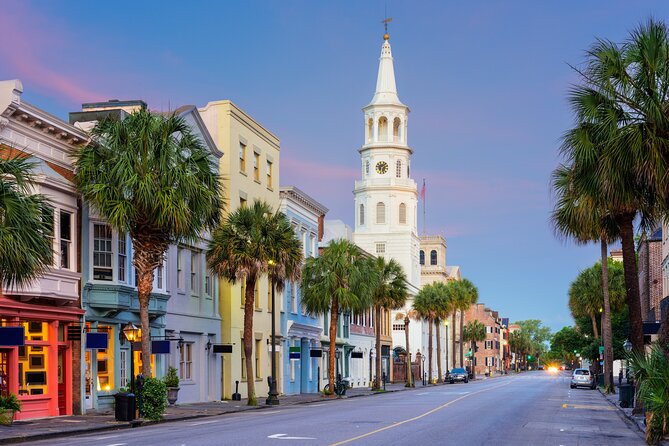
The best part of this tour is that you are not getting a script that just recites dates. Dr. Eric Lager, Ph.D., who is a professor at The Citadel, guides you the way a good teacher does, with the timeline coming from what you can actually see. That makes the stories stick.
You’ll feel it most during the walking segments. As you pass buildings and squares, he ties together why Charleston looks the way it does, who benefited, who suffered, and how the city changed. Several tour moments are built around things you can point at right there, not just general background.
And you get the other key ingredient on a walking tour like this: time for questions. Because the group stays small, you are not shouting at the front of a crowd. You can ask for clarification, request historical context, or steer the conversation to architecture, religion, politics, or specific people.
Price and what you actually get for $40
At $40 per person for about 3 hours, this is priced like a serious walking experience, not a casual overview. What makes it feel like good value is the combination of the guide type and the route density.
First, you are paying for a Ph.D. historian’s time plus a tight group size. That is harder to replicate than you might think with larger tours. Second, many stops are listed as free admission tickets, which means you are not constantly paying again just to access basic viewpoints.
What you should mentally budget for: a few notable places along the way have admission tickets not included. Those are not “skipped,” but they may require separate admission on your own depending on how the stop is handled. If you like to plan calmly, look at those in advance so you are not surprised mid-walk.
Also, bottled water is not included. I recommend bringing your own water bottle, especially since Charleston conditions can shift fast.
Additional Walking Tours on the review pile in Charleston

Route in order: from Civil War connections to Fort Sumter from the Battery
This tour is laid out as a smooth sweep through Charleston’s most story-rich areas, starting downtown and finishing at the harbor view.
It begins at a major hotel that sits inside a Civil War narrative, then moves through historic performance and early 1700s architecture. After that, you hit government buildings and church landmarks tied to some of Charleston’s oldest institutions. You’ll then move toward revolutionary-era associations, French Huguenot community history, and the French Quarter charm. Finally, the walk closes with Greek Revival architecture context and a look at the Fort Sumter site from the Battery, without taking a trip out to the fort itself.
The ending near Rainbow Row matters because it gives you an easy transition into self-guided exploring after the tour. You can stay in the area for photos, dinner, or just another lap through the streets now that you understand what you are seeing.
Stop-by-stop: what you’ll notice, what it means, and what to watch for

Stop 1: Mills House Charleston, Curio Collection by Hilton
You start at the Mills House Hotel, a place connected to the early American Civil War story. Even though you are outside, the guide uses this point to frame how Charleston’s power, wealth, and conflict shaped what got built, what got protected, and how the city moved through wartime.
What to watch for: think about how hotels, business districts, and major buildings sit on top of older civic and military realities. This is a good opener because it tells you what kind of tour you’re about to get.
Stop 2: Dock Street Theater
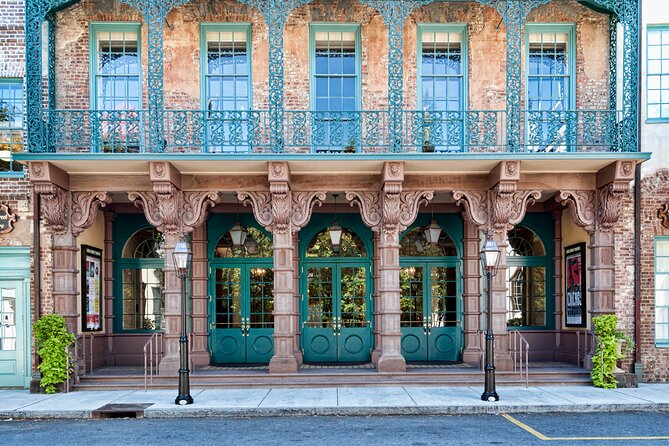
Next up is Dock Street Theater, linked to the story of the first theatre built in North America, plus the colorful, infamous characters that come with theatre history. This stop is where the tour leans into how people lived and entertained themselves, not only how wars were fought.
What to watch for: listen for the way entertainment and culture reflect the city’s social rules and political climate. Theatre is never just theatre, especially in a place with Charleston’s layers.
Elsewhere under Historical Tours across Charleston





Stop 3: Pink House Gallery
At the Pink House Gallery, the guide spotlights one of Charleston’s oldest buildings, dating to around 1712. This is an easy stop to skim if you are rushing, but it’s also one of the best places to slow down, because the building anchors the earlier colonial timeline.
What to watch for: pay attention to how the guide connects early architecture to the city’s long-term growth. You’ll start to see patterns, not isolated facts.
Stop 4: Washington Square
Washington Square brings you to one of Charleston’s historic squares, with multiple monuments. Squares are where the city performs its memory. The guide uses this as a way to explain how monuments and public space get tied to who controls the story.
What to watch for: bring a question to this part if you care about memory and power. Monuments are not neutral, and a history professor will likely point out the why behind the what.
Stop 5: Charleston City Hall
Charleston City Hall is a standout because the building’s past includes being used as a meat market and a bank before it became City Hall. That history helps you understand how civic power grows out of practical needs and commerce.
What to watch for: notice how the guide explains function over time. If you like how buildings evolve, you’ll enjoy this stop.
Stop 6: Charleston County Courthouse
Then you move to the Charleston County Courthouse, where the story connects to what used to be the old South Carolina statehouse. This stop keeps the focus on government, law, and institutions.
What to watch for: listen for the “why this matters” framing. Courthouses often look solemn, but the guide’s job is to show you the human stakes underneath.
Stop 7: St. Michael’s Church
St. Michael’s Church is one of the most important stops because it is tied to Charleston’s oldest church edifice, completed in 1761. You’re not just viewing a church. You’re walking through the religious backbone that helped shape community life.
What to watch for: think about the church as a civic anchor. The guide will likely connect faith, tradition, and local identity.
Stop 8: Heyward-Washington House
The Heyward-Washington House is associated with George Washington staying in Charleston in 1791. This is the moment where the tour gives you a direct link to national history.
What to know: admission for this stop is listed as not included, so if you want the full in-person interior experience, plan to pay separately.
What to watch for: ask about what Washington’s visit signaled and how Charleston functioned during that period. If you want context beyond the headline, this is a good place to ask.
Stop 9: Old Exchange & Provost Dungeon
Old Exchange & Provost Dungeon is powerful. You’ll see the last public building built by the British in North America and hear how the Constitution was ratified in 1788. Even without going into every detail, this stop is packed.
What to know: admission tickets for this stop are listed as not included.
What to watch for: I’d focus on how the guide frames British-built spaces transitioning into American political identity. It’s a stark idea that matches the building’s historical purpose.
Stop 10: French Huguenot Church
Then you reach the French Huguenot Church, with a focus on the French Huguenot community in Charleston and the fact that it was the first church built in the Gothic Revival style. This stop adds cultural texture and shows how immigrant communities left physical marks.
What to watch for: listen for the connection between community survival and architecture. Churches often act like identity documents carved into stone.
Stop 11: French Quarter
The French Quarter is the break from strict institution stops, where charm takes over. The guide still ties this to history, but you get time to absorb the street feel, the layout, and the visual character that keeps people coming back.
What to watch for: use this time to re-orient your eyes. After earlier stops, you’ll spot details faster, because you now know what to look for.
Stop 12: Hibernian Hall
Hibernian Hall is where the tour turns political in a very specific way: it’s connected to where the seeds of disunion were sown, and it also ties to America’s connection to Greek Revival architecture. That mix of political tension and architectural style makes this an unusually engaging stop.
What to know: admission is listed as not included for this stop.
What to watch for: ask about how architectural styles become symbols, not just aesthetics. This is a good stop for people who love architecture because it connects design to ideology.
Stop 13: Fort Sumter National Monument, viewed from the Battery
Finally, you reach the Fort Sumter story. You’ll see where the first shots of the Civil War were fired, but the tour does not go out to the fort. Instead, you look at it from the Battery on Charleston Harbor.
What to watch for: think of it as a “scope” moment. You’ve spent hours in streets and buildings. Now you’re placing the conflict in geography, which helps your brain connect the war to the city’s edges.
The tour ends near the Battery, close to Rainbow Row, so your walk ends with a scenic landing rather than a scramble to find your next stop.
Why the mix of churches, squares, and theatres works
A lot of history tours do one thing well and then repeat it. This one feels more balanced because it treats Charleston like a living system: religion, politics, commerce, and culture all shape the same streets.
St. Michael’s Church and the French Huguenot Church bring spiritual and community history. Washington Square and the government buildings (City Hall, courthouse) give you civic structure. Dock Street Theater and the French Quarter add daily life and cultural identity. Then Hibernian Hall and the Fort Sumter view tie it all back into conflict and national change.
I like that you are not stuck in a single “type” of stop. If you enjoy architecture, you’ll get plenty of it. If you prefer political history, the tour gives you enough to keep that interest alive. And if you like human stories, theatre and historic lodging points do a great job making history feel less abstract.
How to walk it comfortably, hear everything, and get your best questions answered
Because the group is capped at 12, the pace is friendly enough for most people with moderate physical fitness. Still, you should come prepared like it’s a real walk day.
I suggest:
- Wear comfortable shoes you can stand in for a while.
- Bring water since bottled water is not included.
- If you tend to get cold or hot outside, dress in layers, since outdoor walking can be unpredictable.
For your questions, I’d focus on what you personally care about. If you are interested in architecture, ask how Greek Revival or Gothic Revival connects to community identity. If you care about politics, ask how spaces like squares and courthouses shaped authority. And if you want the big picture, ask the guide to tie the stops into one timeline you can carry with you for the rest of your trip.
The tour’s format makes this practical. You are not delayed by crowds, and you can keep a conversation going while you walk between stops.
Best time to book and how to pair this with the rest of your Charleston day
This tour is often booked ahead, with an average of around 22 days in advance. That’s a good hint that the slot you want can disappear, especially during busy seasons.
If you want the biggest benefit, I’d do this earlier in your Charleston visit. The tour ends at the Battery near Rainbow Row, which makes it easy to keep exploring immediately. Once you understand why certain buildings matter, you start seeing the city differently everywhere else you go.
A simple way to plan is to schedule this in the middle of your day so you can follow up with an unstructured walk of your own. You’ll know which streets to linger on and which buildings are worth a second look.
Should you book this Charleston History Walk?
Book it if you want a history tour with real substance, delivered by a professor who can answer questions and connect buildings to events. The small group size is a major advantage, and the route hits the major landmarks you want in a logical sweep, ending with the Fort Sumter perspective from the Battery.
Skip it if you only want casual sightseeing with minimal walking and minimal reading of context. This is designed for people who enjoy learning as they go, and it moves through a lot of stops in about three hours.
If you do book, come curious. Bring water, wear good shoes, and treat it like a walking lecture where you get to steer the Q&A. That combination is where this tour earns its strong track record.
FAQ
How long is the Charleston historical walking tour?
It lasts about 3 hours.
How many people are in the group?
The group is limited to a maximum of 12 travelers.
What language is the tour offered in?
The tour is offered in English.
What does the $40 price include?
All fees and taxes are included. You’ll also receive a mobile ticket.
Are admission tickets included for every stop?
Not for every stop. Some stops list admission ticket free, while several stops list admission ticket not included.
Is bottled water provided?
No, bottled water is not included.
What is the meeting point and where does it end?
It starts at 108 Meeting St, Charleston, SC 29401 and ends at 39 E Battery, Charleston, SC 29401 near Rainbow Row.
What happens if the weather is poor?
The experience requires good weather. If it’s canceled due to poor weather, you’ll be offered a different date or a full refund.
Is there free cancellation?
Yes, you can cancel for a full refund up to 24 hours in advance. If you cancel less than 24 hours before the start time, the amount paid will not be refunded.
Still working through Walking Tours in Charleston
- Historic Charleston Guided Sightseeing Walking Tour★ 5.0 · 6,216 reviews
- Ghosts of Charleston Night-Time Walking Tour with Unitarian Church Graveyard★ 4.5 · 2,835 reviews
- Hidden Alleyways and Historic Sites Small-Group Walking Tour★ 5.0 · 2,335 reviews
- Highlights of Charleston Guided Walking Tour★ 5.0 · 2,206 reviews
- Charleston Haunted Booze and Boos Ghost Walking Tour★ 5.0 · 1,569 reviews
Tours: the rest of the Charleston file
- Charleston’s Old South Carriage Historic Horse & Carriage Tour★ 5.0 · 10,023 reviews
- Historic Charleston Guided Sightseeing Walking Tour★ 5.0 · 6,216 reviews
- Haunted Evening Horse and Carriage Tour of Charleston★ 4.5 · 3,678 reviews
- Charleston Horse-Drawn Carriage Tour: Explore Historic Charleston★ 5.0 · 3,561 reviews
- Fort Sumter Admission and Self-Guided Tour with Roundtrip Ferry★ 4.5 · 3,343 reviews
Tour Reviews: more from our Charleston desk
- Charleston’s Old South Carriage Historic Horse & Carriage Tour★ 5.0 · 10,023 reviews
- Historic Charleston Guided Sightseeing Walking Tour★ 5.0 · 6,216 reviews
- Haunted Evening Horse and Carriage Tour of Charleston★ 4.5 · 3,678 reviews
- Charleston Horse-Drawn Carriage Tour: Explore Historic Charleston★ 5.0 · 3,561 reviews
- Fort Sumter Admission and Self-Guided Tour with Roundtrip Ferry★ 4.5 · 3,343 reviews
Newest Charleston reviews added to this site
- Paranormal Investigation: YOU are the Ghost Hunter
★ 5.0 · 310 reviews - Charleston History and Hops Tour: Bar and History Walk
★ 5.0 · 316 reviews - Middleton Place Admission with Self Guided Tour and Lunch
★ 4.5 · 326 reviews - Sip History in The Sun Cabana Covered Cocktail Class
★ 5.0 · 332 reviews - Private Daytime Horse-Drawn Carriage Tour of Charleston
★ 5.0 · 340 reviews - Charleston’s Historic Downtown Food Tour
★ 4.5 · 349 reviews - Charleston: History and Architecture Guided Walking Tour
★ 4.8 · 349 reviews - The Death and Depravity Ghost Tour in Charleston
★ 4.5 · 371 reviews - Charleston in a Nutshell Private Tours
★ 5.0 · 375 reviews - Charleston History Tour /
★ 5.0 · 388 reviews
Charleston Historic Tours, side by side.
 ★ 5.0Charleston’s Old South Carriage Historic Horse & Carriage TourFrom $5010,023 reviews
 ★ 5.0Historic Charleston Guided Sightseeing Walking TourFrom $306,216 reviews
 ★ 4.5Haunted Evening Horse and Carriage Tour of CharlestonFrom $503,678 reviews
 ★ 5.0Charleston Horse-Drawn Carriage Tour: Explore Historic CharlestonFrom $493,561 reviews
 ★ 4.5Ghosts of Charleston Night-Time Walking Tour with Unitarian Church GraveyardFrom $352,835 reviews
 ★ 4.5Charleston Harbor History Day-Time or Sunset Boat CruiseFrom $442,788 reviews
 ★ 5.0Highlights of Charleston Guided Walking Tour2,206 reviews
 ★ 5.0Charleston Eco Boat Cruise with stop at Morris Island Lighthouse2,111 reviews
This one is also listed in