
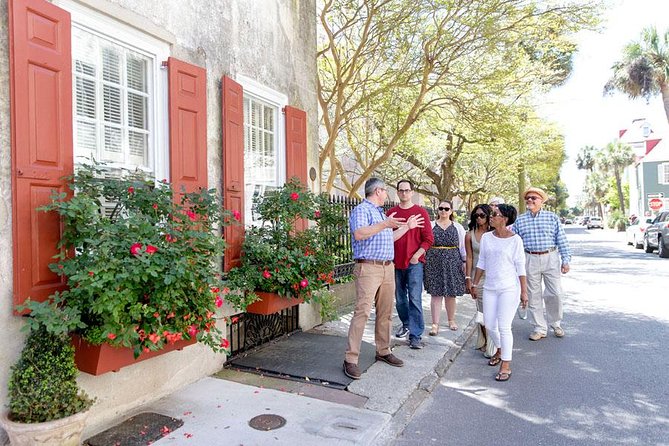
Review · CHARLESTON HISTORIC TOURS
Historic Charleston Walking Tour: Rainbow Row, Churches, and More
Charleston tells stories on every block. On this 2-hour walking tour, you trace landmark streets and quieter corners of the Historic District, from Rainbow Row to waterfront views tied to Fort Sumter, with a guide who keeps things moving and easy to follow.
I love that the big postcard sights get explained in real, practical detail, not just names on a plaque. Rainbow Row turns into more than colorful houses once you learn how the structures fit into the city’s early story, and the included stop at the Powder Magazine Museum gives you a grounded break from outdoor walking.
One possible drawback is simple: you will be standing and walking for about two hours. If you book in peak summer, you’ll want solid shoes and a willingness to sweat a little, even though the guide may look for shaded pauses.
In This Review
- Key tour highlights you’ll feel right away
- What You’re Really Buying for $40.50 in Charleston
- Meeting at 115 Meeting Street, Then Staying on Schedule
- Rainbow Row: More Than a Photo Wall of 18th Century Color
- The Waterfront Battery and Waterfront Park: Photos, Cannons, and Fort Sumter Glimpses
- The Powder Magazine Museum: When the Street Story Gets Real
- Hidden Gardens, Courtyards, Churches, and Graveyards
- Antebellum Mansions and Charleston Single Houses: Reading the Architecture
- Walking the Old Walled Core, Then Getting Your Bearings
- When to Go: Morning vs Afternoon, Heat vs Shade
- Comfort, Questions, and the Role of the Guide
- Price and Value: Why This Ticket Can Be a Smart Use of Time
- Should You Book This Historic Charleston Walking Tour?
- FAQ
- How long is the Historic Charleston walking tour?
- What does the tour cost?
- Where is the meeting point?
- Is morning or afternoon available?
- What are the main stops?
- Is Powder Magazine Museum admission included?
- What is the walking pace like?
- What is the cancellation policy?
Key tour highlights you’ll feel right away
- Rainbow Row views with context you can actually use when you keep exploring on your own
- Fort Sumter views from the Battery area via a visual tour, not an all-day ferry plan
- Powder Magazine Museum entry included, so your ticket covers more than just street stops
- Hidden gardens, courtyards, churches, and graveyards, which adds texture beyond mansions and photos
- Small group size (max 20) and a leisurely pace with time for questions and photos
What You’re Really Buying for $40.50 in Charleston

For $40.50, you’re not just paying for a walk. You’re buying an easy way to connect the dots between Charleston’s layout, its architecture, and the conflicts that shaped it.
This tour is set up like a good orientation for a first or second day in town. You cover a tight historic area on foot, so you get a feel for where things are without trying to self-navigate through alleys, squares, and streets that look similar until you learn the patterns. And because one of the stops includes a museum ticket, your time inside actually has weight, not just window-shopping.
Where this becomes real value is how the guides seem to work. In the reviews, names like Keith, Graham, Gordon, Eric, Diane, and Nelson come up again and again for staying engaging, answering questions, and keeping people moving at a pace that feels manageable. One review also points out the guide found shaded spots and built in little resets, which is exactly what you want on a 2-hour street plan.
Meeting at 115 Meeting Street, Then Staying on Schedule
You meet at 115 Meeting St, Charleston, SC 29401, and the tour ends back at the same spot. It runs about 2 hours, and it operates in all weather conditions, so plan on layers if rain shows up or humidity is high.
Two practical points matter here:
- Arrive 15 minutes early, because the tour leaves on time.
- Expect a leisurely pace, but you are still walking most of the way.
I like the structure because it reduces decision fatigue. You don’t have to guess where to start, how long to linger at Rainbow Row, or when you’re supposed to switch from “photo mode” to “listen mode.” The guide handles that rhythm.
Also, you’ll get a mobile ticket, and service animals are allowed. The group is capped at 20 travelers, which usually means you’re not getting lost in a crowd of strangers when you have a question.
Additional Walking Tours on the review pile in Charleston

Rainbow Row: More Than a Photo Wall of 18th Century Color

Rainbow Row is the obvious opener, and it earns the hype. It’s a set of thirteen colorful historic homes that date to the 18th century. The tour calls out an important fact right away, that it’s among the longest pre-Revolutionary structures in America. That framing helps you see it as more than a pretty strip.
What I like about this stop is that it sets up later “architecture reading.” Once you understand how Charleston single houses typically work, Rainbow Row stops feeling random. You start noticing details like how entrances and access often relate to the street and alleys, and why those narrow, clever house layouts were built the way they were.
You’ll likely get a quick orientation too, since many routes through the Historic District revolve around this area. It’s also one of those stops where you can control your pace. Even if you want to take extra photos, you’re still in a good location to keep the tour moving afterward.
The Waterfront Battery and Waterfront Park: Photos, Cannons, and Fort Sumter Glimpses
After Rainbow Row, the tour shifts to the Charleston Waterfront Park and the Historic Waterfront Battery area. This is where the scenery does heavy lifting.
You’ll get photo-friendly views of southern mansions, and you’ll see cannon and cannonball details in the landscape. The Battery area also gives you those classic Charleston ingredients that make postcards look effortless, like palmettos and wide water views.
Most importantly, you get a visual tour of Fort Sumter. That’s key. You’re not promised a ferry ride or inside access to the fort. Instead, you learn what you’re looking at and why it matters, using viewpoints from the waterfront area. For many first-time visitors, that’s the smarter choice because it fits into a 2-hour walk without turning the day into logistics.
There is one caution from the experiences people shared: one person felt the description promised more direct mention of the Battery and Fort Sumter views than they got. That suggests the exact emphasis can depend on the guide and the timing. Still, the stop area is built for it, so if Fort Sumter is your top priority, arrive prepared to ask your guide to point out the specific sightlines.
If you want the best chance for great photos, time your phone or camera shots for clearer sightlines rather than while the group is still gathering.
The Powder Magazine Museum: When the Street Story Gets Real
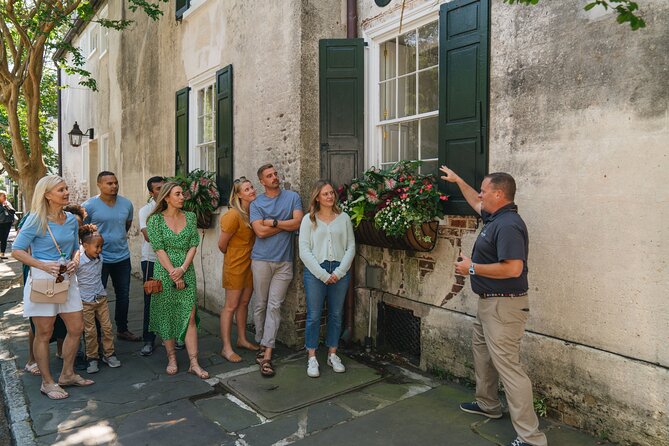
The tour includes admission to the Powder Magazine Museum, and that matters because it gives the walking route context. You’re not just collecting scenery. You’re learning why this town became important, and how conflict shaped daily life.
The stop is short, but it’s an excellent “anchor moment” in the itinerary. When you return to the streets afterward, you’ll be able to connect the buildings and waterfront views to the Revolutionary and Civil War themes that the tour highlights.
In reviews, guides like Graham and Gordon specifically get credit for explaining how multiple wars intersected with South Carolina, and how the stories connect to what you see downtown. That kind of framing is exactly what the museum stop supports.
If you’re traveling with kids or someone who gets bored by long museum sessions, this is still a solid choice because it’s part of a timed walk and not a full stand-alone museum day.
Hidden Gardens, Courtyards, Churches, and Graveyards
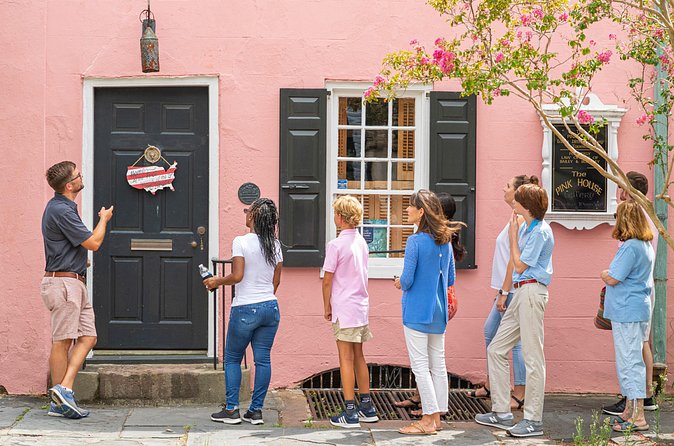
Charleston is full of dramatic homes, but the quieter spaces are what make the Historic District feel lived-in. This tour includes hidden gardens and courtyards, plus historic churches and graveyards.
Why do I think this part is valuable? Because it changes the tone of your visit. Mansions and waterfront cannons are easy to photograph, but gardens and burial grounds show the slower, more personal side of the city. They also help you understand the city’s layout: where people paused, where they gathered, and how the community preserved memory.
You’ll also likely hear how Charleston’s past is not all one-note. One review praises a guide for handling difficult topics with respect, which tells me the best tours keep the storytelling balanced. You should expect the guide to address major historical themes without turning it into dry recitation.
If you prefer “soft stops” with time to look around, this is where you’ll benefit from the leisurely pace. These are also good breaks if it’s hot, since courtyards can offer relief compared to open sidewalks.
Elsewhere under Historical Tours across Charleston






Antebellum Mansions and Charleston Single Houses: Reading the Architecture

A good architecture walk is like learning a new language. You start seeing patterns. This tour points out major features like antebellum mansions, and it discusses distinctive Charleston single houses.
The key detail the tour description shares is that these houses are typically one room in depth, with the short access toward the street, and the entrance area often aligned along the long side in the alley. That one bit of structural logic helps you make sense of what otherwise looks like random placement or narrow frontage.
Even if you are not an architecture person, I think this is one of the tour’s smartest teaching moves. Charleston is visually ornate, but the city also has practical building choices. Learning the “why” makes the streets feel less like a museum exhibit and more like a functional town that adapted over time.
And since the route covers cobblestone streets and custom iron gates, you’ll have plenty of visual material for the guide’s commentary. You’ll likely spend enough time on the route that you can look at one gate, then later look again with a better sense of what it signals.
Walking the Old Walled Core, Then Getting Your Bearings
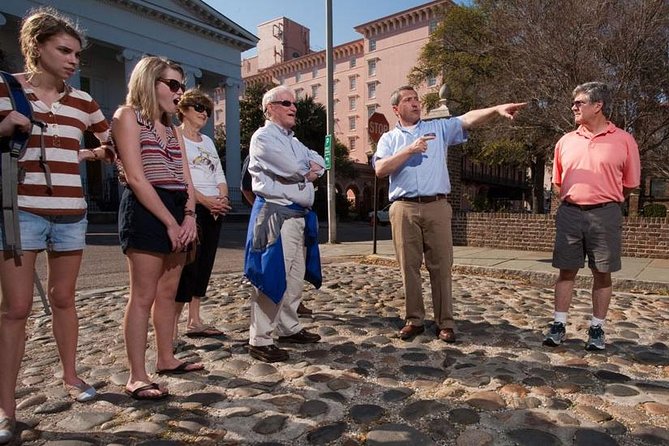
One thing I really appreciate about this setup is how it helps you get oriented. Reviews describe the tour as mostly staying in the formerly walled part of Charleston, with walking along areas like East Bay and Battery Street for portions.
That matters because Charleston can feel maze-like if you don’t understand what neighborhood boundaries are doing. Once you walk the old core with a guide, you later recognize landmarks faster. You can choose your next stroll with less guessing.
It also helps with timing. If you’re doing Rainbow Row and the Battery in the same morning or afternoon, you’re effectively stitching together the city’s two biggest “modes,” the elegant streets and the waterfront perspective. After that, it’s easier to decide what you want to chase next on your own.
When to Go: Morning vs Afternoon, Heat vs Shade
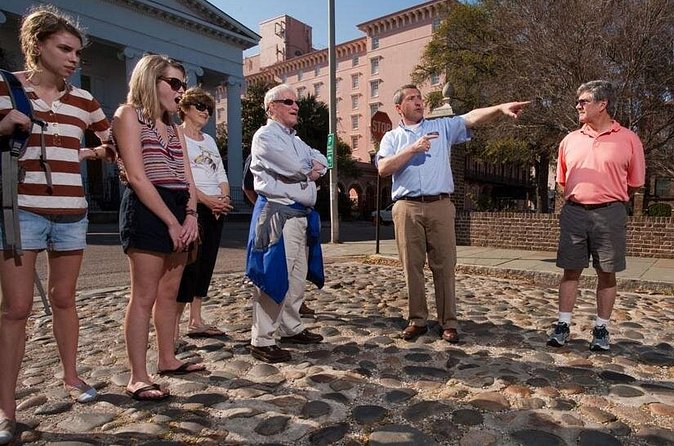
This tour offers a morning or afternoon choice, and that’s not just a scheduling option. It can change how enjoyable the walk feels.
In hotter months, a two-hour outdoor walk can be a lot. One review specifically notes the tour can feel very hot and suggests spring or fall as better times. Another review says the guide paid attention to heat and stopped in shaded spots whenever possible. So the plan is not “no matter what,” but “expect effort, and hope for smart shade breaks.”
My advice:
- If you hate heat, lean toward a morning start so you’re not dealing with peak sun later.
- Bring a water bottle and sun protection even if the guide is doing shade strategy.
- Wear comfortable shoes. Multiple reviews emphasize this point, including a guide who was accommodating with a stroller, so the route seems designed to be doable for many walkers.
Also note the tour is described as operating in all weather conditions, so bring a light rain layer if storms roll in.
Comfort, Questions, and the Role of the Guide
The single biggest variable in any walking tour is the guide. Here, the reviews strongly suggest the guides are part of the value.
You’ll see names like:
- Keith, praised for sharing Charleston history in a way that keeps it interesting
- Graham, credited for clear, articulate explanations across major wars tied to South Carolina
- Gordon, repeatedly described as entertaining and informative
- Eric, called personable and funny, with answers to questions
- Diane, praised for amusing stories that bring places to life
- Faith, noted for being entertaining and informative
- Nelson, recognized for historical tidbits and keeping the experience worthwhile
- David, highlighted for bringing neighborhoods and old homes into focus
- Boyd, described as sharing architecture notes and anecdotes
- Fran, praised for lots of information that makes the town feel extraordinary
- Lacie and Jon Battem, mentioned for education and patient question time
What I take from that is not just “they’re good.” It’s that the best tours give you both facts and story flow, and they respond when you ask questions.
One review also mentions the guide accommodated a stroller without making anyone feel like a burden, and another points out the pace included options for shade and small breaks. That tells me the tour is not designed to grind people through nonstop walking.
Price and Value: Why This Ticket Can Be a Smart Use of Time
Let’s talk money in a grounded way. At $40.50 per person for about two hours, you’re paying for:
- a guided route through major Charleston landmarks
- built-in stops that include Rainbow Row and the Waterfront Battery photo area
- Powder Magazine Museum admission included
- commentary that ties together architecture, war themes, and everyday life
A lot of tours charge similar amounts for street-only sightseeing. Here, the museum ticket included makes your time feel more “complete.” Plus, Rainbow Row and the waterfront park area are free to visit on site, so you’re not paying extra admissions as you go.
Is the value tied to the guide? Yes. But even with an average guide, the base itinerary still covers high-demand places in one walk. That means you can get a good overview and then decide what to repeat or expand later.
Should You Book This Historic Charleston Walking Tour?
I’d book this if you want a structured introduction to Charleston that does more than skim the surface. It’s a great fit for people who like walking, appreciate architecture details, and want a clear route with story context. The included Powder Magazine Museum stop turns it into a “half sightseeing, half understanding” kind of outing, which I find a strong use of limited vacation time.
Skip it, or at least adjust expectations, if you hate outdoor walking or you’re extremely heat-sensitive, since two hours on your feet is still two hours on your feet. Also, if Fort Sumter is your single top goal, be ready to ask your guide to point out the exact sightlines during the waterfront portion, since one review suggested that focus can vary.
If you’re doing Charleston for the first time, this tour is a sensible foundation. It helps you see the city clearly, remember what you saw, and plan your next steps without feeling lost.
FAQ
How long is the Historic Charleston walking tour?
The tour lasts about 2 hours.
What does the tour cost?
The price is $40.50 per person.
Where is the meeting point?
You meet at 115 Meeting St, Charleston, SC 29401, USA. The tour ends back at the meeting point.
Is morning or afternoon available?
Yes, you can choose either a morning or afternoon tour.
What are the main stops?
The tour includes Rainbow Row, the Charleston Waterfront Park and Historic Waterfront Battery, and a stop with admission to the Powder Magazine Museum.
Is Powder Magazine Museum admission included?
Yes. Admission to the Powder Magazine Museum is included with the tour purchase.
What is the walking pace like?
The tour pace is described as leisurely, and it is designed so most travelers can participate.
What is the cancellation policy?
There is free cancellation, and you can cancel up to 24 hours in advance for a full refund. If you cancel less than 24 hours before the start time, the amount paid is not refunded.
Still working through Walking Tours in Charleston
- Historic Charleston Guided Sightseeing Walking Tour★ 5.0 · 6,216 reviews
- Ghosts of Charleston Night-Time Walking Tour with Unitarian Church Graveyard★ 4.5 · 2,835 reviews
- Hidden Alleyways and Historic Sites Small-Group Walking Tour★ 5.0 · 2,335 reviews
- Highlights of Charleston Guided Walking Tour★ 5.0 · 2,206 reviews
- Charleston Haunted Booze and Boos Ghost Walking Tour★ 5.0 · 1,569 reviews
Tours: the rest of the Charleston file
- Charleston’s Old South Carriage Historic Horse & Carriage Tour★ 5.0 · 10,023 reviews
- Historic Charleston Guided Sightseeing Walking Tour★ 5.0 · 6,216 reviews
- Haunted Evening Horse and Carriage Tour of Charleston★ 4.5 · 3,678 reviews
- Charleston Horse-Drawn Carriage Tour: Explore Historic Charleston★ 5.0 · 3,561 reviews
- Fort Sumter Admission and Self-Guided Tour with Roundtrip Ferry★ 4.5 · 3,343 reviews
Tour Reviews: more from our Charleston desk
- Charleston’s Old South Carriage Historic Horse & Carriage Tour★ 5.0 · 10,023 reviews
- Historic Charleston Guided Sightseeing Walking Tour★ 5.0 · 6,216 reviews
- Haunted Evening Horse and Carriage Tour of Charleston★ 4.5 · 3,678 reviews
- Charleston Horse-Drawn Carriage Tour: Explore Historic Charleston★ 5.0 · 3,561 reviews
- Fort Sumter Admission and Self-Guided Tour with Roundtrip Ferry★ 4.5 · 3,343 reviews
Newest Charleston reviews added to this site
- Paranormal Investigation: YOU are the Ghost Hunter
★ 5.0 · 310 reviews - Charleston History and Hops Tour: Bar and History Walk
★ 5.0 · 316 reviews - Middleton Place Admission with Self Guided Tour and Lunch
★ 4.5 · 326 reviews - Sip History in The Sun Cabana Covered Cocktail Class
★ 5.0 · 332 reviews - Private Daytime Horse-Drawn Carriage Tour of Charleston
★ 5.0 · 340 reviews - Charleston’s Historic Downtown Food Tour
★ 4.5 · 349 reviews - Charleston: History and Architecture Guided Walking Tour
★ 4.8 · 349 reviews - The Death and Depravity Ghost Tour in Charleston
★ 4.5 · 371 reviews - Charleston in a Nutshell Private Tours
★ 5.0 · 375 reviews - Charleston History Tour /
★ 5.0 · 388 reviews
Charleston Historic Tours, side by side.
 ★ 5.0Charleston’s Old South Carriage Historic Horse & Carriage TourFrom $5010,023 reviews
 ★ 5.0Historic Charleston Guided Sightseeing Walking TourFrom $306,216 reviews
 ★ 4.5Haunted Evening Horse and Carriage Tour of CharlestonFrom $503,678 reviews
 ★ 5.0Charleston Horse-Drawn Carriage Tour: Explore Historic CharlestonFrom $493,561 reviews
 ★ 4.5Ghosts of Charleston Night-Time Walking Tour with Unitarian Church GraveyardFrom $352,835 reviews
 ★ 4.5Charleston Harbor History Day-Time or Sunset Boat CruiseFrom $442,788 reviews
 ★ 5.0Highlights of Charleston Guided Walking Tour2,206 reviews
 ★ 5.0Charleston Eco Boat Cruise with stop at Morris Island Lighthouse2,111 reviews
This one is also listed in